Autism spectrum disorder: what is it, symptoms, treatment
Content
- What is Autism Spectrum Disorder?
- Types of RAS
- Autistic disorder
- Asperger's Syndrome
- Pervasive developmental disorder without further specification
- How Common Are Autism Spectrum Disorders?
- Causes of Autism Spectrum Disorders
- Genetic factors
- Psychological factors
- Symptoms and Signs
- Early signs of ASD: 6-18 months
- Signs of ASD in Preschoolers
- Language development
- Playback
- Social interaction
- Behavior
- Symptoms of ASD in School-Age Children
- Language skills
- Social interaction
- Behavior
- Treatment for Autism Spectrum Disorders
- Applied Behavior Analysis (PAP)
- TEACCH (Teach)
- Speech and speech therapy
- Drug treatment
- Forecast
What is Autism Spectrum Disorder?
Autism spectrum disorder (ASD) are a series of related developmental disorders in humans that begin in childhood and persist throughout adulthood.
ASD can cause a wide range of symptoms, grouped into three broad categories:
- Problems and difficulties with social interaction, such as a lack of understanding and recognition of the emotions and feelings of others.
- Impaired language and communication skills, such as delayed language development and inability to initiate or participate properly in conversations.
- Unusual patterns of thinking and physical behavior. This includes repetitive physical movements such as tapping with your hands. The child develops certain behavioral habits that can upset him if these habits are broken.
There is currently no cure for the disease, but there are a number of treatments available to improve the symptoms listed above.
Types of RAS
Symptoms and signs of ASD can vary from child to child and from mild to severe.
Broadly speaking, there are three main types of disorder:
- Autistic disorder, sometimes known as' classic autism».
- Asperger's Syndrome.
- Pervasive Developmental Disorder Unspecified (PDD-NOS), also called atypical autism.
Autistic disorder
Children with autistic disorder usually have severe language, social interaction, and behavior problems. Many children with autistic disorders can also have learning difficulties and below average intelligence.
Asperger's Syndrome
Children with Asperger Syndrome have milder symptoms that affect social interaction and behavior. Language development is usually not affected, although problems often arise in certain areas, such as understanding humor or speech patterns.
Children with Asperger's syndrome usually have above average intelligence. Some children have experience in areas that require logical thinking, memory, and creativity, such as mathematics, computer science, and music. (However, 1 in 200 children are exceptionally skilled, so-called "autistic").
Pervasive developmental disorder without further specification
CRD-NOS can be thought of as a “diagnosis of exclusion”. Children with some, but not all, features of autistic disorder and / or Asperger's syndrome are diagnosed with CRD-NOS.
Most children with CRD-NOS have milder symptoms than children with autistic disorder, but they do not have the good language skills and higher than average intelligence seen in Asperger syndrome.
How Common Are Autism Spectrum Disorders?
ASD is not uncommon, with an estimated 1 in every 100 children with ASD.
ASD is more common in boys than girls. Boys three to four times more often get autismthan girls.
The number of diagnosed cases of ASD has increased over the past two decades, but this does not necessarily mean that the condition is becoming more common. Some experts argue that the increase in the number of diagnosed cases may be due to the fact that health care professionals have begun to better diagnose cases of the disorder.
In the past, many children with autism spectrum disorder may have been mistakenly labeled as “difficult” or “shy” and were not given the treatment they need.
Causes of Autism Spectrum Disorders

Autism spectrum disorder can be described in two ways:
- Primary ASD (also known as idiopathic ASD [self-onset]): with it, there are no major diseases, which could explain the nature of the symptoms.
- Secondary autism: there is an underlying medical condition that is believed to be responsible or partially responsible for the symptoms of autism.
90% of ASD cases are primary. The remaining 10% are secondary.
Genetic factors
Most researchers believe that certain genes a child inherits from their parents may make them more vulnerable to developing ASD. There are two reasons for this.
First, ASD is known to occur in families. If an older child develops the disorder, there is a 5-6% chance that any new child born to the same parents will also have the disorder.
If an identical twin develops ASD, there is a 60% chance that the other twin will also have ASD.
Currently, no specific genes associated with ASD have been identified.
Psychological factors
Much of the research into possible psychological factors underlying disease is based on a concept known as the Model of the Human Mind or Theory of Mind.
Read also:Dyslexia
The theory of mind is a person's ability to understand the mental states of other people, that is, to realize that everyone has the person you are dating has their own set of desires, intentions, beliefs, emotions, perspectives, sympathies and antipathies. Or, more simply, the Model of the human psyche is the ability to see the world through the eyes of another person.
It is believed that by the age of four, most children without ASD fully understand the human psyche model. Children with ASD develop a limited understanding of the pattern. This could be one of the main reasons for their social interaction problems.
Symptoms and Signs

Because Autism Spectrum Disorder can cause such a wide range of symptoms, there are many different ways to group these manifestations.
It is helpful for parents to know the signs and symptoms of ASD associated with the developmental stages of the child.
Early signs of ASD: 6-18 months
Although it can be difficult for parents to detect, most children with ASD develop symptoms between 6 and 18 months of age. These symptoms are explained below.
- The kid does not follow your gaze. For example, when you look at your watch, a non-autistic child copies and looks at your watch. In addition, your child does not look at the objects pointed to him.
- The child does not have a happy expression when they look at you.
- The child does not "talk", that is, replies back and forth when talking to him.
- The child does not recognize or respond to the voice, but is still aware of other sounds, such as the ringing of a bell or the barking of a dog.
- Your toddler doesn't show much interest in drawing your attention to things by pointing at them or pulling your hand towards them.
- The child rarely or never makes gestures such as pointing or waving.
Signs of ASD in Preschoolers
The signs of ASD usually become more apparent as the child gets older.
Language problems will become more visible. It is likely that the child will have problems with social interaction. They will also show unusual patterns of behavior.
Symptoms that often develop at this age are explained below.
Language development
The child may have a speech delay or may not speak at all. Most children can form two phrases such as "ball... want" or "I... drink" before the age of two.
Language delay usually does not affect children with Asperger Syndrome, but their speech can be affected in other ways. For example, it can sound very monotonous, flat, and / or unusually fast.
Playback
The child may not show much interest in figurative play with toys, but they play in a repetitive manner.
For example, instead of pushing the toy car on the floor, the child can concentrate on spinning one of the wheels only on the car. Or, instead of using leg blocks to create an object, they arrange the blocks in order of size or color.
Children with ASD often prefer to play with household items, such as rope, pens, or keys, rather than toys. They happily play alone for hours without needing supervision or attention.
Social interaction
Many children with ASD often look right through someone. They have little or no awareness of other people.
The child may not be interested in other children of the same age or participate in community activities.
Some children with ASD may try to establish friendships with the children, but then behave inappropriately, such as suddenly kissing or beating another child.
Behavior
Many children with ASD develop a repetitive pattern of physical behavior. These patterns are known as stereotypes.
Examples of stereotypes include:
- snapping fingers;
- clapping hands;
- wiggle back and forth;
- constant and inexplicable sniffing of things;
- licking objects.
Many children with ASD develop rigorous rituals, such as watching a specific cartoon at a specific time on YouTube or watching a favorite video from start to finish, including all opening credits. If these rituals are violated, the child may become severely hysterical or harm himself by hitting his head or biting his own skin.
Children with ASD often seem unaware of the pain and trauma that lead other children to seek help from their parents. Many parents with ASD report that their child has a serious cut or bruise, but the child looks happy.
Children with ASD may suddenly become upset about certain sounds, such as the sound of a vacuum cleaner or motorcycle, or the sudden appearance of a bright light.
Read also:Treatment and prevention of diphtheria in a child
Children with autism spectrum disorder often have a strong dislike for certain foods. This is usually based on the texture of the food rather than taste. For example, they may avoid eating soft foods that dissolve in the mouth or hard foods that require vigorous chewing.
Symptoms of ASD in School-Age Children

Some children with mild to moderate illness may see their symptoms improve as they get older. Sometimes attending school gives them the opportunity to learn social and communication skills that naturally come from non-autistic children.
Children with more severe autism may find school increasingly stressful. This can trigger episodes of destructive and challenging behavior.
The main signs that develop in older children and adolescents are described below.
Language skills
Although most children with autistic disorder improve their language skills, they may still have some language difficulties, such as:
- call themselves “you”, “she” or “he”, not “I”;
- repeat words and phrases just heard or learned from a movie or television program they watched;
- speak in advance with memorized phrases such as “I want it now” or “Where are we going”, instead of combining individual words into new sentences;
- their speech has an unusual rhythm;
- the inability to start or join a conversation when it is not about specific topics that interest them, such as dinosaurs or trains.
Social interaction
Older children with autism spectrum disorders often have additional problems in school because they do not understand how to interact in society.
This lack of understanding happens in different ways. For example, they do not understand that children usually treat their teacher differently than their classmates.
The child may not be interested in questions and activities that other children like, such as music, fashion, sports, or outdoor activities.
Many children with ASD are unaware that they are invading other people's privacy. However, they can become very upset if they feel that their personal space is being invaded.
All these factors often prevent a child from making friends with children of the same age. However, some children with ASD do manage to build relationships with young children or adults.
Behavior
A child with ASD is likely to need rigorous procedures as they get older. Many children with ASD develop a very specific interest in a particular subject or activity, usually involving collecting, numbering, or listing.
This can range from a normal child's activity, such as collecting soccer stickers (although children with ASD often pursue interest much more intensely than other children), before classes or subjects not usually associated with childhood, such as an interest in train schedules or reading old books of some kind of computer manuals.
Children with Asperger Syndrome often excel in academic subjects that include facts, numbers, and logical thinking. But they may fail in subjects that require abstract thinking, such as literature.
Treatment for Autism Spectrum Disorders
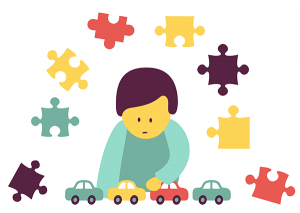
There is currently no cure for autism spectrum disorder. However, there are a number of special educational and behavioral programs (often called interventions) that have been shown to be effective in improving the skills of children with ASD.
There are many different types of interventions for ASD, so it is often difficult to determine which one is best for your child.
The American Academy of Pediatrics recently published an Intervention Checklist that outlines what it believes are the most important principles and components for effective interventions. They are outlined below.
- The intervention must be intense. The child must be actively involved for at least 25 hours a week, 12 months a year.
- The intervention should have a low teacher-to-student ratio (i.e. small classes). This is necessary so that the child has a lot of direct interaction with the teacher and that any group work is done in small groups of students.
- Family members should be involved in the intervention, with particular emphasis on parenting education.
- The intervention should provide an opportunity for communication with other children without ASD. This is how the child achieves certain developmental goals.
- The intervention should be highly structured, that is, based on a sequence of established procedures that, we hope, the child will be happy to accept.
- The intervention should include opportunities for the child to apply any new skills acquired in new conditions and situations. For example, visiting new places or meeting people that the child does not know.
Read also:Acetone in the urine of a child (acetonuria in children): what to do, causes, symptoms, treatment
Any intervention should focus on important aspects of the child's development. This is:
- communication skillssuch as the ability to start a conversation;
- social interaction skillssuch as the ability to understand other people's feelings and then react to them;
- cognitive skillssuch as encouraging creative play;
- academic skills, "Traditional" skills that a child needs to develop their education, such as reading, writing, and math.
Some of the commonly used interventions for ASD are explained below.
Applied Behavior Analysis (PAP)
Applied Behavioral Analysis is based on two goals:
- Break down skills (such as communication and cognitive skills) into small tasks, then teach these tasks in a highly structured manner.
- Rewarding and reinforcing positive behavior, and encouraging and redirecting inappropriate behavior.
PAP programs usually take place at home. They consist of 40 hours of intensive care per week for two to three years.
The PAP program is usually carried out:
- a program consultant who develops and oversees the program;
- a programming team, which usually consists of at least three therapists alternating between sessions with your child.
The program team will work with the child one-on-one for two to three hours. The team will try to teach the child by breaking the skills down into smaller tasks. These tasks are then taught in a repetitive and structured manner, with a particular emphasis on praising the child and reinforcing positive behavior.
A PAP program usually starts with simple tasks such as getting a child to clap their hands. When the child responds, the team member reinforces that response by giving verbal praise or a favorite toy.
Over time, these small tasks will evolve into more complex skills that will help your child's development.
TEACCH (Teach)
TEACCH is a type of educational intervention that places great emphasis on structured learning using visual cues. Research has shown that children with autism spectrum disorder often respond better to information presented visually.
TEACCH is often held in special day centers, but you can also get training so that you can work with your child at home later.
Speech and speech therapy
Speech and language therapy is a type of skill training designed to improve a child's language skills, improving their ability to communicate with others socially.
The therapist uses a number of techniques, such as showing visual aids, stories, and toys, to improve communication skills, such as:
- listening skills;
- to be attentive;
- understand the social and / or emotional context of specific words and sentences;
- the ability to understand non-literal language such as metaphors and figures of speech.
Note: Many of the above interventions are time consuming, labor intensive and can cost a lot of money.
Drug treatment
There are no drugs available to treat the main symptoms of ASD, but there are drugs that can treat some of the associated symptoms, such as:
- repetitive thoughts and behavior;
- aggressive behavior (tantrums or self-harm).
The most widely used drug is antidepressants a class of serotonin reuptake inhibitors (SSRIs), which act by altering the levels of a chemical called serotonin in the brain. Serotonin is known to affect behavior and mood.
Examples of medications include:
- Fluoxetine;
- Paroxetine.
Some children with ASD who are taking SSRIs may suddenly have a sudden rise in serotonin levels. This can cause a group of side effects known as serotonin syndrome (serotonin intoxication).
Symptoms serotonin syndrome mild to moderate severity include:
- confusion of consciousness;
- excitation;
- muscle twitching;
- sweating;
- trembling;
- diarrhea.
If your child develops any of the symptoms listed above, stop taking the medication and seek immediate advice from your GP.
Symptoms of severe serotonin syndrome include:
- high fever (fever) 39.4ºC or higher (103ºF)
- convulsions (seizures);
- irregular heartbeat;
- loss of consciousness.
If your child has any of these serious signs, call an ambulance.
Forecast
The prognosis of children with ASD usually depends on how severe their symptoms are and, especially, on the level of intelligence.
Children with mild to moderate symptoms, moderate to above average intelligence, often grow up to be independent adults with work, long-term relationships, and children.
Children with more severe symptoms, who have below average intelligence, are unlikely to be able to live as independent adults. They may need extra care and assistance for the rest of their lives. However, there is no reason why they cannot enjoy a good quality of life.