Pseudomembranous colitis symptoms and treatment in adults
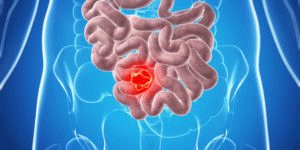
Pseudomembranous colitis, the symptoms of which at an early stage of development, are similar to the manifestations of any inflammatory process of the mucous membrane of the large intestine - a dangerous bowel disease.
Any colitis is an inflammatory process that develops in the intestinal mucosa, but pseudomembranous colitis is the simultaneous result of incorrect drug treatment and the activity of anaerobic bacteria belonging to the genus clostridium.
This dangerous family is the causative agent of tetanus, botulism, and is present when anaerobic infection occurs.
A full-fledged representative - Clostridium dificile, leads to the development of membranous colitis in the human body.
Inflammation of the large intestine can be of very different etiology, but pseudomembranous colitis of the intestine is recognized as one of the most dangerous.

Content:
- 1 The nature of the problem and how it occurs
- 2 Additional provoking factors
- 3 Symptoms and signs of MVP
- 4 Diagnostics and treatment according to the severity of the condition
- 5 Surgical treatment of emergency situations with MVP
- 6 Disease prognosis
- 7 Useful video
The nature of the problem and how it occurs
There is a significant variety of forms that inflammation of the intestinal mucosa can take due to its variable origin.
The inflammatory process in the colon can be caused by:
- pathology of the immune system;
- toxic damage;
- pathogenic agents introduced from the outside (bacteria and viruses);
- be the result of radiation sickness;
- provoked by ischemic lesions or ulceration.
The most harmless of them is spastic colitis of the intestine, which occurs against the background of nutritional disturbances, experiences and bad habits.
Common symptoms for each form of the development of the disease are a violation of the functionality of digestion, defecation disorders and pain symptoms that each patient experiences.
In almost all cases of diseases, complete cure is impossible without eliminating the main provocateur.
Its presence determines not only the symptoms characteristic of a certain form of the disease, but also the tactics of treatment. To eliminate inflammation of the intestinal mucosa, etiopathogenetic therapy is performed, the nature of which is determined by the presence of an infectious agent, toxins, immune disorders, and so on.
Pseudomembranous colitis of the intestine is caused by a Clostridium difficile infection, which is spread by the fecal-oral route, and often gets into the patient's intestines from dirty hands.
It is believed that it is largely present in hospital premises, while living on any surface and perfectly retaining its pathogenic properties in an open environment.
In the normal state of the body, it can lead to mild diarrhea, after which it will be neutralized by a healthy microflora of the human intestine.
Certain prerequisites are necessary for an infection of the large intestine to become threatening.
Usually, favorable conditions for development are created by medications that have a depressing effect on the normal intestinal microflora.
Pseudomembranous colitis is an inflammation of the colon, which requires a combination of several conditions:
- taking medications that help destroy the natural intestinal microflora (these can be antibiotics or immunosuppressants);
- a weakened organism to which drugs were prescribed;
- the presence of Clostridium difficile in the environment around the patient;
- non-compliance with the rules of elementary sanitation and hygiene.
Membranous colitis is a polyetiological disease, the development of which requires several factors that have entered into a cumulative interaction.
The initial symptoms of the disease resemble the clinical picture of any inflammation of the mucous membrane, which makes it difficult to determine the true cause.
In addition, clostridia can be present in the intestines of a healthy person as a conditionally pathogenic form, the activity of which is controlled by the presence of beneficial and natural intestinal microflora.
In children, pseudomembranous colitis develops extremely rarely, although they quite often can be passive carriers of infection, but natural immunity does not allow a negative state to develop.
Taking antibiotics leads to the destruction of the usual set on the mucous membrane, resulting in associated colitis.
This is a form of the disease that occurs when favorable conditions arise for active life and reproduction of a pathogenic agent.
Membranous colitis - associated, arising from the association - the combination of several indispensable conditions.
There are other provoking factors that can cause an intestinal infection and the development of a negative scenario.
Additional provoking factors
Pseudomembranous colitis, contrary to popular belief, develops not only from taking antibiotics and the presence of infection.
Sometimes the body can cope with the development of infection, but this process is hampered by additional factors, also known as risk factors.
A high probability of infection is present in elderly people in a painful condition, the development of which is accompanied by age-related changes and a weakened immune system.
In this case, the following can have a negative impact:
- pregnancy and bearing a fetus, which make certain changes in the body to fulfill the natural reproductive function;
- taking (in addition to antibiotics, or independently of them) drugs that inhibit the acidity of the stomach;
- tube feeding or constant use of enemas;
- improperly conducted self-medication and unauthorized intake of antibacterial drugs;
- carrying out surgical operations of any kind in the area of the abdominal space;
- other inflammatory processes in the intestine (Crohn's disease or ulcerative colitis);
- the presence of an oncological disease and methods of its treatment (undergoing chemotherapy, bone marrow transplantation, etc.);
- any serious illness that caused a weakening of the immune system or required massive drug therapy: oncology, AIDS, severe renal failure).
Any colitis is characterized by the development of an inflammatory process and treatment without a diagnostic study it is impossible to carry out, because the external symptoms of the inflammatory process appear approximately the same.
Symptoms of severe pseudomembranous colitis differ from early manifestations, but methods treatment, due to the complexity of the course and the appearance of infection in other parts of the intestine, significantly get complicated.
Therefore, one of the main conditions for successful treatment of the disease is early diagnosis. The reason for its more in-depth manifestation is the symptoms present in the patient.
Symptoms and signs of MVP
The main initial symptoms of pseudomembranous colitis are so uncommon that they can be attributed to manifestation of any other disease, ranging from a toxic-viral lesion and ending with a banal food poisoning.
Almost any disorder of intestinal activity can be accompanied by:
- disorder of defecation in the form of watery and frequent stools, diarrhea with a pungent unpleasant odor, frequent and painful urging;
- chills and a permanent rise in temperature to subfebrile;
- dehydration organically accompanying frequent loose stools;
- nausea and vomiting (not always) caused by toxic secretions of microorganisms.
Atypical in this condition may be a drop in blood pressure, which in old age can be correlated with general weakness and illness.
After some time, symptoms of intoxication appear, and the nature of the stool changes.
They acquire a grayish-yellowish tint with greenish color, and the unpleasant odor intensifies. you can often see bloody blotches in the feces.
Colitis is a disease in which diarrhea is characteristic of a certain form, however, when present constantly, it is cause for concern.
Against the background of a permanent defecation disorder, other negative symptoms appear in a person:
- general and rather significant weakness of the body;
- paresthesia and subjective skin sensations like running goose bumps;
- muscle cramps;
- a sleepy state sets in, the patient becomes lethargic and helpless, a significant increase in heart rate is felt;
All this is accompanied by a constant urge to urinate, during which a change in the color of urine from yellow to brown is detected.
Clinical cases are known when, in the course of the rapid development of symptoms, a lethal outcome occurred. In the absence of the necessary practice, such a course of the disease is rather easy to confuse with cholera.
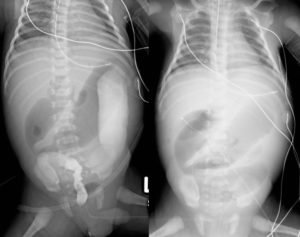
The result of the activity of Clostridium dificile is a toxic megacolon: pathological enlargement of the large intestine.
It is this condition that becomes the determining factor in most cases of death.
Although the onset of dehydration, which led the body to hyperkalemia, can cause the cessation of cardiac activity.
Symptoms and treatment in the disease are closely interrelated: the more difficult the patient's condition, the more extreme measures are taken to save him.
Diagnostics and treatment according to the severity of the condition
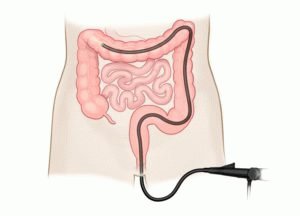
Diagnostics does not take a long time, after determining the address, proctology, diagnostics in which is based on endoscopy and sigmoidoscopy, allows you to see a characteristic clinical picture.
A yellowish plaque of a non-intense shade, from which colitis got its name, makes it possible to fairly accurately determine the state of the mucous membrane.
From its diagnostic addresses, gastroenterology, diagnostics in which is mainly carried out on on the basis of laboratory studies, receives information about the presence of a pathogenic agent quite definite etiology.
An additional diagnostic factor in the presence of their addresses is proctology-diagnostics can to detect toxic expansion of the intestine, which occurred as a result of pathological vital activity clostridium.
Treatment for pseudomembranous colitis in adults depends on the severity of the condition diagnosed.
At the stage of onset of diarrhea, a diet is applied, if the presence of a pathogenic bacterium is suspected antibiotics are stopped or another etiotropic therapy is prescribed if antibiotics are taken in this moment no.
Vancomycin and Metronidazole are two drugs of choice that are recommended for use if withdrawal of antibiotics has not led to the disappearance of symptoms.
The choice of the required drug is carried out on the basis of the existing indications. The last drug should not be used for liver diseases, leukopenia or severe diseases of the central nervous system.
Treatment of pseudomembranous colitis in adults provides for several ways along which complex treatment is directed:
- correction of the present dysbiosis is performed, for which Bifikol or Bifidumbacterin are prescribed;
- treatment of the main syndromes that have developed in the patient's body (dehydration, disorders electrolyte metabolism, hyperkalemia, removal of intoxication syndrome) - this is called pathogenetic therapy;
- surgical treatment is prescribed for signs of toxic intestinal expansion, or intestinal perforation resulting from the activity of a pathogenic aggressor;
- in some cases, symptomatic treatment is also recommended, but it does not apply to antidiarrheal therapy, because the treatment of diarrhea is ineffective if its direct provocateur is not eliminated.
Treatment of pseudomembranous colitis is impossible at home, especially if the disease has become threatening.
The rate of change of state can be increasing quite intensively, and decisions on the introduction of intravenous drugs must be made and implemented very quickly.
In severe form, at a late stage of diagnosis, almost half of the cases require surgical intervention.
For a quick decision about the operation, hardware proctology-diagnostics is required.
Surgical treatment of emergency situations with MVP
Indications for surgical treatment are seen in two cases: with fulminant course, toxic dilation, or dictated by subsequent intestinal perforation.
In many cases, the decision about surgery is made when the condition worsens, despite all the measures taken.
A timely surgical intervention may still be fatal if the patient's body was weakened, and the nature of development is lightning fast.
A bowel resection is performed, in which the surgeon removes the affected part of the intestine and forms an anastomosis.
Perforation of the intestinal wall by the products of the activity of pathogenic bacteria can lead to the development of peritonitis, and then the sanitation of the intestines and adjacent areas is mandatory, if necessary.
Disease prognosis
Even experienced experts say that it is impossible to predict in which of the cases the development of the disease may begin after antibiotic therapy.
When carrying out such therapeutic measures, doctors must take into account all the risk factors present.
With the timely diagnosis of the onset condition, the prescribed treatment methods usually have a beneficial effect.
Etiotropic, symptomatic and pathogenetic therapy brings the expected results and the symptoms of the disease disappear.
One of the main conditions for recovery is the prescribed diet on time, the correction of the intestinal microflora and the abolition of antibiotics.
Pseudomembranous colitis, the symptoms of which were noticed in time and differentiated from the symptoms of other diseases, can be cured rather quickly if therapy is started in a timely manner.
There are slightly more deaths during surgical operations, but this is not due to the inability of the surgeon.
Rather, the serious condition of the patient when the decision was made, or the lightning-fast development of an already significantly complicated form of the course of the disease.
Sometimes a fatal outcome occurs due to an untimely visit to a doctor at a stage when surgery does not help either.