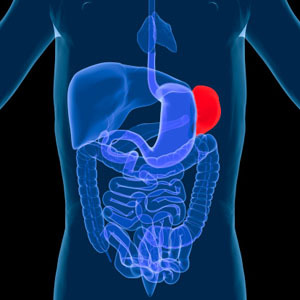
Enterofuril with vomiting: will it help a child with diarrhea and without, instructions
In the fight against food poisoning, the antimicrobial drug Enterofuril is recommended. Helps to easily cope with gram-positive, gram-negative microorganisms. Nifuroxazide, which is part of the drug, gives it special properties.
Enterofuril is successfully used for vomiting, diarrhea of bacterial origin. It takes a little time from nausea to vomiting. Vomiting often begins before diarrhea. Taking the medication relieves the person from upcoming diarrhea. The presence of vomiting without diarrhea indicates an infection of the stomach. As soon as the bouts of vomiting have subsided, treatment is started.
It is used to treat diarrhea in adults and children. The condition will improve after 1-2 hours after application.
Content
- 1 Poisoning reasons
- 2 Disease development
-
3 Instructions for use
- 3.1 Compound
- 3.2 pharmachologic effect
- 3.3 Indications for use
- 3.4 Contraindications
- 3.5 Side effects
- 3.6 Release form
- 3.7 Dosage and application
- 3.8 Features of the reception
- 4 Analogs
Poisoning reasons
Causes - poisoning with contaminated food (water), infection due to direct contact (person, animal). Sometimes children are too lazy to wash their hands before eating. They contaminate food, get viral or bacterial poisoning.
Disease development
In an adult, a child, poisoning develops in the same way:
- Nausea.
- Vomit.
- Diarrhea.
- Temperature.

Poisoning in an adult and a child proceeds with varying degrees of severity. An intestinal infection in a child begins acutely. The child's body has immature immunity. Prescribing Enterofuril, a pediatrician, simultaneously treats the disease and stimulates the immune system.
In case of nausea and vomiting, pain relievers and fixatives should not be used.
At temperatures above 38.5 degrees, the child is hospitalized.
Instructions for use
The antimicrobial drug is used in all age categories. Helps to quickly cope with symptoms of infection, is a popular, affordable treatment vomiting with diarrhea and without it.
Advantages:
- A wide range of actions.
- Bactericidal and bacteriostatic action.
- High level of bioavailability and safety.
- Fast therapeutic effect.
- Maintains the balance of normal intestinal microflora.
- Prevents the development of secondary infection with viral infection.
- Not absorbed in the intestine.
- Boosts the immune system.
Compound
The active ingredient of Enterofuril is nifuroxazide, a derivative of the 5-nitrofuran group. For the treatment of children, it is advisable to use liquid dosage forms. The suspension is made on the basis of sugar syrup, yellow in color, has a pleasant banana aroma.
pharmachologic effect
In small doses it has a bacteriostatic effect, and in large doses it has a bactericidal effect.
The bacteriostatic effect is to suppress the enzyme - dehydrogenase. As a result of this effect, cell respiration is disrupted, the tricarboxylic acid cycle is inhibited. Suppression of life processes in bacteria leads to the loss of their ability to reproduce.
The bactericidal effect of Enterofuril is that large doses of the substance are capable of destroying the cell membrane. As a result, the bacterium dies.
When the release of enterotoxins is suppressed, the amount of fluid in the intestinal lumen decreases. This leads to a decrease in irritation of its walls. The number of urge to defecate decreases.
After taking Enterofuril, an activation of immunity is observed, and phagocytosis increases. The medicine has a selective effect on pathogenic microorganisms. Does not destroy normal microflora. Does not lead to the development of dysbiosis.
The rate of elimination directly depends on the characteristics of the organism. After Enterofuril, urine may turn yellow.
Indications for use
It can be successfully used to treat bacterial diarrhea. It is used for therapeutic and prophylactic purposes in patients with chronic gastrointestinal diseases.
Rotavirus infection (intestinal flu) cannot be cured with the drug. Viruses do not die from Enterofuril. In cases of viral diarrhea, it is prescribed prophylactically. It will help to avoid the attachment of a secondary bacterial infection. After taking the drug, the risk of developing serious complications is minimal.

Contraindications
- Individual intolerance to active and auxiliary substances.
- Helminthiasis.
- Diabetes mellitus (due to sugar in the drug).
- Pregnancy.
- Premature babies and babies under 1 month old.
- Not applicable to persons under the influence of alcohol. There is a high likelihood of developing a disulfiram-like reaction (breathing problems, heart palpitations, abdominal pain, severe vomiting and diarrhea).
Side effects
Practically absent. The development of allergies to the constituents of the drug is possible. Occasionally nausea, vomiting, headache. There are no data on incompatibility with various drugs. The exceptions are drugs containing alcohol and drugs that depress the central nervous system.
Release form
Available in solid and liquid dosage forms.
- Capsules 100 and 200 mg (children over 3 years old and adults).
- Suspension 200 mg / 5 ml (inside).
The use of the suspension for babies from 1 month old is absolutely safe. The drug has no systemic effect, does not affect the functioning of organs and systems.
Dark glass vials with tamper evident. Equipped with a measuring spoon for ease of use and correct dosing.
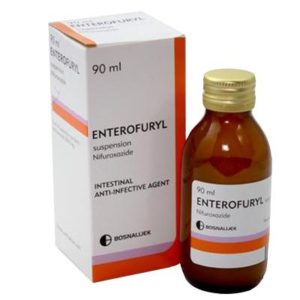
The suspension can also be used to treat adults.
Storage takes place in a place protected from the sun. The shelf life is 3-5 years, depending on the form of release.
Dosage and application
Syrup:
- A child up to six months is given half a measuring spoon 2-3 times a day.
- From six months to two years, half a measuring spoon 3-4 times a day.
- Over the age of seven, give one scoop 3-4 times a day.
Capsules:
- Children from three to seven years old, one capsule 3 times a day.
- From seven years old and adults one capsule 3-4 times a day.
The drug can be used regardless of food intake. Shake the syrup before use. Swallow the capsule whole, do not chew. The permissible period of use of the drug is 1 week.
Features of the reception
The drug should not be used simultaneously with enterosorbents (activated carbon) and fixing agents (loperamide). The therapeutic effect of Enterofuril will decrease. The use of these funds will slow down the elimination of toxins. The phenomena of intoxication will increase. The patient's condition will rapidly deteriorate.
It is important to eat right during treatment. Medical nutrition is adhered to for 1 week after poisoning. In the future, the diet will gradually expand. The patient needs an easily digestible food that does not irritate the walls of the stomach and intestines. Failure to comply with the diet will have a bad effect on the body, exhausted by the disease.

On a note:
- Only a doctor has the authority to prescribe this drug.
- The use of Enterofuril during pregnancy is permissible under the close supervision of a physician.
- With the development of severe allergies, the use of the drug should be stopped immediately.
Analogs
The drug has many analogues:
- Ersefuril.
- Stopdiar.
- Adisord.
- Ekofuril.
- Mirofuril.
- Elufor.
When choosing an analogue, it is necessary to consider:
- Country of origin.
- Manufacturing plant.
- Cost of goods.
- Release form.
- Dosage.
It is preferable to choose a drug manufactured in the USA, Japan, Western and Eastern Europe.