Stomach Heaviness and Nausea: Causes and Treatment
The time of a developed civilization is of great benefit to people. The medal has a straight and a reverse side. In pursuit of blessings, humanity, in a hurry stuffing a greasy sandwich on duty into its mouth, pours a boiling cup of coffee. On the go, a scarf is wound up at random, the state of the bank account is checked in the smartphone with the other hand, and now the person turns the ignition key and the mechanism for the development of diseases starts.
The feeling of being stretched from the inside is an unpleasant sensation! The increasing heaviness, pain in the right hypochondrium, which arose after eating, attracts to the ground with a huge lump, a colossal loss of strength is felt, and weakness arises in the body. I want to lie down in order to attack as soon as possible, let go, let me rush to new heights of business. An unpleasant ailment is familiar to every person, but not everyone is given the right to stop the frantic rhythm in time, to look for the causes of the ailment. Think about it: lost money is incomparable with lost health.
Content
- 1 Physiological causes
- 2 Pathological causes
- 3 What specialists are involved in the treatment of dyspeptic problems
- 4 Methods for the study of the gastrointestinal tract
- 5 How to quickly remove dyspeptic disorders with medicinal and alternative methods
Physiological causes
The reasons for the development of heaviness in the stomach are varied in origin. They can be a physiological consequence of a sharp change in diet, be a pathological confirmation of the development of dangerous diseases. In the first case, overeating guilt is the result of gluttony at a feast. A person loses a sense of proportion, using a variety of food dishes. To violations of the diet include excessive enthusiasm for diets - the acid composition of gastric juice changes, disrupting the digestion process. Fasting is dangerous. The exclusion of some products (for example, meat, milk, eggs) and replacement with others (mushrooms, fish, legumes) has a detrimental effect at work of the gastrointestinal tract, causes an imbalance of metabolism - the first sign of the occurrence of food allergies.
A special place in the occurrence of discomfort in the intestines and stomach is occupied by the use of chemicals as pharmaceuticals (diet pills, dietary supplements of unknown origin, antibiotics, pain relievers, antispasmodics, etc.), and the intake of chemicals of alcoholic toxic content (acid, perfume and etc.). Smoking is no less harmful - the poisonous tar of tobacco smoke, getting into the stomach, settling on the mucous membrane, gradually cause deformation and destruction.
Do not forget about the mechanical cause of heaviness in the stomach, possible nausea, vomiting - ingestion of foreign objects. They are not able to undergo full-fledged cleavage in the stomach, cause damage to the walls that sag from the severity of the object that has fallen, and are injured. We are talking about metal parts swallowed by young children, mentally unstable individuals. Sharp edges, the weighted weight of the object can damage the gastric mucosa and cause perforation.
Physical component causing discomfort: change in atmospheric pressure, partial dysfunction of the vestibular apparatus, caused by increased meteosensitivity, walks in the mountains, motion sickness in transport, with sharp fluctuations in altitude, temperature. The victims complain first of dizziness, then unpleasant disorders from the gastrointestinal tract disturb.
Pathological causes
The second group - pathological factors, include the causes associated with diseases of the internal organs - the stomach and gastrointestinal tract. Acute or chronic disorders:
- Gastritis is an inflammation of the gastric mucosa, it is hyperacid (when the acidity of gastric juice is increased) and hypoacid (with low acidity). A distinctive feature of hyperacid gastritis is persistent heartburn resulting from the reflux of gastric juice into the esophagus. With gastritis with low acidity, slow digestion is noted. The patient may be disturbed by belching with food masses, there is a feeling of heaving.
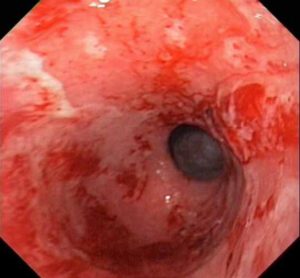
Gastritis in humans
- Duodenitis: inflammation of the parts of the duodenum.
- Cholecystitis: diseases of the gallbladder and ducts. A similar ailment is manifested by gastritis, severe heartburn. Heartburn of persistent bitter aftertaste.
- Hepatitis: inflammation of the liver. The manifestations of diseases are different, depending on the type of hepatitis: A, B, C, D, etc. A common symptom is an increase in the size of the liver, felt on palpation in the right hypochondrium. The most severe form is hepatitis C. It is called "affectionate death".
- Pancreatitis: disturbances in the work of the pancreas. Pancreatitis turns into pancreatic necrosis - the causes of disability, human death.
- Enteritis, colitis, proctitis: diseases of the intestines. Diseases are manifested by persistent disturbances in gas formation. Gas accumulates in the intestinal cavities, it is difficult to find a way out. A distended intestine is a severe pain test for the body.
Chronic diseases take on advanced forms, leading to neoplasms on the walls of the tract (polyps, tumors, outgrowths of feces, etc.) - if improperly monitored, further growths lead to serious consequences up to lethal outcome.
In addition to diseases of the digestive organs, there are a number of other pathologies that can cause deterioration, heaviness in the stomach, nausea, vomiting, increased gas production:
- Infections. Penetrating into the human body, they multiply intensively, take away useful substances, leaving in return the toxic products of their vital activity. The first sign of the presence of infectious inflammation is diarrhea, constant indomitable vomiting.

- Cancer neoplasms. Increasing in size, the tumor is capable of oppressing neighboring organs, changing, completely destroying their function.
- Diseases of the cardiovascular system: nausea is the first symptom of increased blood pressure, a formidable onset of heart attack, stroke.
- Hormonal disorders: diabetes of different etiology. Symptoms indicate the approach of a hypo- or hyperglycemic coma. The victims feel a noise in the head, weakness, body temperature decreases, sweating, absent-mindedness is noted.
- Diseases of the genitourinary system: Nausea, vomiting - frequent signs of irradiation (recoil) of pain from a diseased organ to a healthy one - coming out of the left-sided kidney a stone or an inflammatory process in the left appendage of a woman becomes the instigator of trouble from the stomach due to the adjacent location of organs.
- Disorders of the nervous system: vomiting indicates an impending epileptic seizure, nausea occurs after severe nervous tension (death in the eyes, fright, exams, rupture relations).
- Injuries and postoperative changes. If the integrity of the organ is violated, its full performance is also impaired. With internal bleeding, reflex vomiting of blood, other fluids that overflows the stomach is observed.
Special states of the appearance of problems associated with dysfunction of the gastrointestinal tract include the onset of pregnancy, the approach of menstruation, menopause in women. In the early stages of pregnancy, the developing fetus is perceived as a foreign body - the woman's immunity reacts toxicosis, later the child growing in the uterus squeezes the organs located near the uterus, limiting the normal functioning. With the approach of menstruation, climacteric manifestations, hormonal changes play a decisive role.

What specialists are involved in the treatment of dyspeptic problems
The huge variability of the causes of dyspeptic disorders makes us think once again about the inexpediency of self-medication. By eliminating one cause on their own, people rarely manage to simultaneously see another. A person who is trying to get rid of the feeling of nausea day by day is not able to detect the presence of internal bleeding or oncology.
Even with harmless symptoms, especially if they persist for a long time (temperature more than three days), it makes sense to consult a specialist. Only a doctor, having carefully collected anamnesis and analyzed the results of the data obtained, is able to choose an adequate treatment. Which doctors deal with the problems of digestive disorders:
- The therapist is the main local attending physician. Knowing the patient's medical history, if necessary, he will refer the sick person to the appropriate narrow-profile specialist.
- If the problem lies exclusively in the gastrointestinal tract, then it will be a gastroenterologist, in other cases it will be necessary consultation of additional specialists (cardiologist, neuropathologist, endocrinologist, nephrologist or urologist, for women - gynecologist).
- If acute conditions are suspected - appendicitis or internal bleeding, the patient is referred to a surgeon, and oncologists are engaged in the problems of tumor-like neoplasms.
People, having eliminated the primary manifestations, are in no hurry to appear to specialists in order to achieve a complete recovery. They prefer to make fatal mistakes. A disease that is not detected in time can destroy a full life by taking root.

Methods for the study of the gastrointestinal tract
To make an accurate diagnosis of problems with the gastrointestinal tract, a number of medical studies are carried out:
- For women - tests that exclude pregnancy.
- Blood tests: general and biochemical: the ESR indicator and the level of leukocytes look for the presence of acute inflammatory processes, the level of hemoglobin - anemic syndrome is excluded. The level of liver enzymes, pancreatic enzymes is assessed to assess the work of the gastrointestinal tract. It is advisable to take tests in the morning on an empty stomach.
- Urine tests: urolithiasis is excluded, kidney function is assessed.
- Analyzes of vomit, feces (lasting more than 4 days) for infection, internal bleeding.
- Gastroscopy - internal examination of the stomach by swallowing a special tube with a camera. It is carried out to study the walls of the stomach for erosions, ulcers, neoplasms. It is performed under local or general anesthesia, the patient lies on his side, and a specialist conducts diagnostics.
- Fibro-, colonoscopy - studies of different parts of the intestine, similar to the method of gastroscopy, differing in the methods of introducing the camera into the body.
- X-ray of the stomach is an old method, but it is used. The test subject is given a contrast agent (or chalk solution) to drink, and then, when the patient reaches a feeling of slight stomach overcrowding, an x-ray is taken. Chalk accumulations, highlighting indicate the presence of a pathological process.
- Computed tomography or magnetic resonance imaging is a modern study of the stomach. Sometimes it requires the introduction of a contrast agent to clarify the diagnosis.
How to quickly remove dyspeptic disorders with medicinal and alternative methods
Despite the fact that it is categorically undesirable to self-medicate without conducting the necessary examinations, it is necessary to remove unpleasant symptoms before going to the doctor. This is important to prevent further negative effects on the body. A lump in the abdomen, heavy head, constant unnerving rumbling in the central part, swelling in the epigastrium and intestines and other troubles are the tip of the iceberg. Pain syndrome is stress for the body, affecting the quality of immune functions, increasing the risk of new manifestations.
To relieve the feeling of heaviness in the stomach, enzyme preparations are used - Festal, Mezim-forte, Creon, Fosfalugel, etc. These drugs should be taken with caution, as they cause impaired pancreatic secretion.
Folk remedies such as freshly brewed tea with lemon, anise, linden or peppermint, sometimes sweet candies or chewing gum have a positive effect. A recognized folk remedy for suppressing an attack of nausea is the juice of freshly squeezed potatoes, it is recommended to take one or two teaspoons several times a day.
If stale food or unknown alcoholic beverages became the culprit of the nauseating urges, then restrain approaching vomiting is absolutely not necessary, since the body is freed from toxic substances and prevent it's not worth it.
Bloating and flatulence are eliminated by boiled fennel or dill seeds in a ratio of 1 teaspoon to a glass of water. The broth is drunk in small portions several times a day.
An excellent antiseptic medicine that perfectly copes with diarrhea - a decoction of chamomile or calendula, but take an infusion categorically should not be without the consent of the doctor - such agents give a disinfecting effect and can greatly disrupt the bacterial intestinal flora.
Not the last place is taken by a properly selected therapeutic diet. Everyone knows that fried aromatic shish kebab in the presence of gastrointestinal diseases can be the first reason that a person is sick, and his stomach puffed out like a beach ball.
An attack of nausea or just a headache - for any reason, this is a signal of a disorder in the body, that something needs to be done! Attention to yourself - love for your body, positive attitude, success in business.