Stomach hurts after cesarean section: duration, reasons
Childbirth is the most exciting moment of the entire pregnancy. It's time for the long-awaited baby to be born. But the process can go through two options: natural childbirth and cesarean section. Most women consider surgery to be a good alternative to the natural route, but this opinion is wrong. Caesarean section is a full-fledged operation with possible unpleasant complications and sensations.
Discomfort occurs after a short amount of time after the operation, is localized in the lower abdomen and is considered normal until a certain time. The emerging pain syndrome during physical exertion is a natural phenomenon. The healing of the seams is slow, the tension of the incision site provokes an unpleasant sensation. The pain can stop after a month, or it can last more than six months. Recommendations of doctors after surgery:
- Do not play sports;
- Eliminate hard homework;
- Do not lift heaviness.
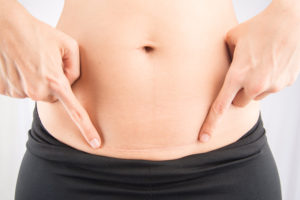
The most common complaint of women when, after a cesarean section I have a stomachache - flatulence. In the intestine, as a result of the restoration of vigorous activity, excess gases are formed, expanding the walls of the organ and pressing on the seams. If the pain is very bothersome, it is worth consulting. The doctor will prescribe medications that can relieve pain. But other symptoms are also likely.
Content
-
1 Lower abdominal pain after surgery
- 1.1 Uterus
- 1.2 The seam
- 1.3 Scar
- 1.4 Intestines
- 1.5 Innervation at the incision site
- 2 Severe pain after cesarean section
- 3 Complications after surgery
- 4 Duration of pain after surgery
Lower abdominal pain after surgery
Lower pain after surgery is considered a natural occurrence. During natural childbirth, contractile movements occur for some time in the uterus, which leads to pulling pains similar to menstrual pains. The pain symptom increases with breastfeeding. During the process, a hormone is produced in the female body that contributes to the contraction of the internal female muscles.
Uterus
For more prolonged and persistent discomfort, you need to see a doctor. This symptom may indicate disturbances in the uterus, an internal inflammatory process.
The seam
Discomfort provokes the seam. The healing process of tissues after their damage is long and always accompanied by unpleasant sensations. Sudden movements, turns, even coughing or sneezing create a sharp, rapidly passing pain.
A strong sensitivity of the scar to stress persists for a week, then subsides. In pharmacies, a bandage is sold to reduce pain and pressure on the tissues located next to the seam; it is advised to wear it for women in labor.
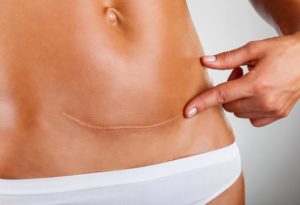
Scar
As the healing progresses, a scar appears on the body, creating a dull and stabbing pain. After carrying out a cesarean section, a woman should monitor the healing of the wound and make sure that an inflammatory process or purulent discharge does not appear at the incision site.
Intestines
Mom, after an abdominal operation, may complain of abdominal pain due to intestinal dysfunction. During surgery, anesthesia is used. The drugs affect the small and large intestines. As a result, there is an increase in gas formation, and the motor activity of the tract worsens. Bloating and delayed bowel movements cause discomfort and pain for the woman in labor.
Lack of bowel movement leads to constipation and a feeling of heaviness in the stomach. To normalize bowel function, a woman must follow a diet. Perhaps the appointment of medications that contribute to the rapid elimination of feces and cleaning the intestinal tract.
Unpleasant sensations are caused by the disturbed position of the internal organs. During pregnancy, the uterus increased with the fetus and moved apart the organs located inside the abdominal cavity. After the caesarean section and the removal of the fetus, the uterus has not contracted and continues to put pressure on the intestines. The stomach, shifting, presses on the nearby organs. The process continues for two days, and the location of the viscera becomes normal.
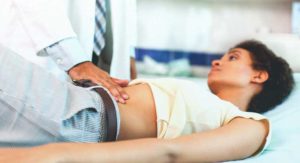
Innervation at the incision site
The incision through which the child is pulled out means a break in the nerve connections - innervation. Therefore, for a long time, a young mother feels numbness in the lower abdomen under the seam. As the nerve connections recover, the numbness gradually goes away. Nerve endings take much longer to heal and connect than normal tissues. The process takes up to 1 year.
Severe pain after cesarean section
The first days after the operation, the young mother has sharp and severe pains: she inhaled deeply, turned sharply. Pain when walking is possible. This is the result of the load on the area of the body damaged by surgery. The function of the tissues around the incision has not yet recovered. Despite the discomfort, the woman in labor should not lie down, otherwise the rehabilitation period will be delayed. You need to try to move more, pace gradually, then tissue regeneration and healing of the incision occurs more intensively. In case of unbearable pain, you need to see a doctor.
Complications after surgery
Discomfort in the abdomen can occur due to violations that have arisen inside the uterus or in nearby organs.
Postoperative complications are divided into two types: damage to internal organs due to postoperative sutures and individual intolerance to anesthesia.
Violations due to seams are manifested by external signs:
- The scar is hard to the touch;
- There is swelling in the incision area;
- The abdomen increases, bloating.
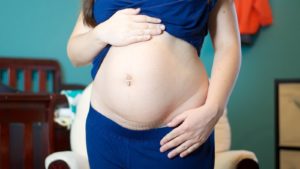
With a natural reaction of the body, a hard scar and swelling will disappear after 1 year. A small fold of skin may appear above the seam, this is the norm in the absence of discomfort.
Redness of the suture area is a sign of scarring of immature connective tissue, suppuration, inflammation, or fistula. A good doctor will provide qualified assistance.
Keloid scars appear as a result of infection in the wound, with hormonal disruptions, with a decrease in immunity. A keloid scar differs from a normal scar in soreness and a feeling of internal itching. In the place of fusion of immature connective tissue, pulsation is observed, the skin stretches and numbness of the skin is felt.
A woman needs to understand that the appearance of keloid scars and the expanding connective tissue subsequently have an unaesthetic appearance. Medicine has learned to cope with the situation. The patient is prescribed electrophoresis, pressure bandages are offered. Perhaps the cardinal solution is surgical removal.
It is possible that an infection will enter the seam if there is no antiseptic treatment. Infection manifests itself:
- The body temperature rises.
- In the area of the incision, swelling appears, the seam turns red.
- Purulent fluid seeps out.
If the condition worsens, the doctor will have to do a surgical cleaning of the festering tissue.
Infection in the suture interferes with the regeneration process, which leads to the dehiscence of the skin after the removal of the threads. The woman herself often leads to an identical result when she lifts weights or strains her stomach.
The occurrence of fistulas is associated with the penetration of infection or an allergic reaction to the materials of the suture threads. It is manifested by external signs:
- A lump appears under the skin, causing pain when touched.
- Redness around the incision.
- Purulent fluid seeps through the seam.
It is required to seek medical help, tightening leads to tissue inflammation, the formation of a purulent area and an abscess.
Adhesion may occur after surgery in the lower abdominal cavity. This is due to the lack of resorption of blood or exudate. Being on the outside of the internal organs, the fluid becomes thick, replaced by fibrous connective tissue. The walls of the organs are fused together, forming a joint. At first, the connection is elastic and soft and it can be broken, but gradually calcium penetrates into the fibrous tissue and it hardens. Then nerve endings and blood vessels appear in it. If the compound causes damage, pain syndromes, fever, weakness and constipation appear.
A complication after a cesarean section is a disease - endometritis. This is an inflammatory process in the uterus caused by pathogens.
Duration of pain after surgery
Pains that arise from natural causes go away quickly. Intense sensations subside 7 days after the caesarean section. To reduce pain symptoms on the indicated days, the doctor prescribes analgesics, but the mother often refuses, for fear of harming the baby.
Pain symptoms arising from stress do not quickly release. Recovery and healing of damaged tissues occurs 3-4 months after surgery. It should be noted that the manifestation of unpleasant sensations gradually subsides, approaching the end of the recovery stage.
The uterus, which causes pain in the lower abdomen, stops contracting and returns to normal after 3-5 days, a maximum of a week after the birth of the child.
Long-term pain that does not stop for a long time is studied by a doctor. Self-medication will lead to complications that will affect the baby.