First aid for appendicitis: algorithm of first aid actions
Appendicitis is a disease characterized by inflammation of the appendix of the cecum, differing in different degrees of severity. For treatment, surgical intervention is mandatory. The patient may not notice any symptoms for a long time, and this becomes the main cause of severe complications and deaths.
The main symptoms of appendicitis:
- Nausea and vomiting.
- Colic in the abdomen is an important symptom that indicates the possibility of inflammation of the appendix.
- High body temperature.
- Increased heart rate.
- Sharp pain when changing body position.
- Weakness and loss of ability to work.
- Increased breathing rate.
Content
- 1 How to determine if a patient has appendicitis and provide first aid?
-
2 What algorithm should be followed when first aid is given for appendicitis?
- 2.1 Features of appendicitis during pregnancy
- 3 What is the treatment, what are the clinical guidelines?
- 4 What is the nursing process for OA therapy?
- 5 Recovery diet
How to determine if a patient has appendicitis and provide first aid?
You can find out this disease at home, in addition to the presence of the above symptoms, in the following ways.
The main method by which the presence of inflammation of the appendix is determined is palpation, more often used for adults. It is necessary to lay the patient on a surface without bends. Spread your arms along the body, slightly spread your legs and bend at the knees. Then press lightly on the right upper abdomen (right hypochondrium). After that, immediately pull your fingers back, if acute pain occurs after that, you need to immediately call an ambulance.
To identify this disease in a child, it is necessary to detect specific symptoms. If the child sits down and pulls his knees to him, while crying or screaming a lot, this indicates the development of inflammation.
Discomfort while walking, tingling while coughing are signs of OA.
What algorithm should be followed when first aid is given for appendicitis?
- Call an ambulance. For timely treatment, emergency care must be provided, which will be carried out by trained specialists.
- Do not take medicines, food or drink.
- It is forbidden to apply a warm burner.
- If the first attack has passed, still wait for an ambulance.
Features of appendicitis during pregnancy
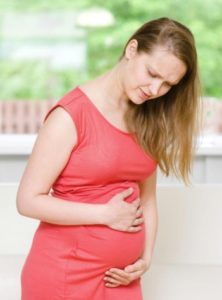
Appendicitis in pregnant women is diagnosed more often than in other patients. OA symptoms vary throughout the stages of pregnancy. At the initial stage, inflammation is characteristic of the disease, the patients complain of pain, experience bouts of vomiting, and the temperature rises. In the second stage (mid-pregnancy), the symptoms change. Due to the enlargement of the uterus, the appendix shifts to the gallbladder, so the localization of pain changes. Symptoms of appendicitis are similar to toxicosis, and the temperature rarely rises, so diagnosis becomes more difficult. Treatment of pathology in pregnant women is carried out in the form of an urgent operation with the possibility of drainage.
There is a national guideline for the management of appendicitis. The purpose of its creation is to systematize a large amount of material and comments from leading surgeons, it covers the main clinical recommendations and advice.
What is the treatment, what are the clinical guidelines?
A proven and widely used method of patient treatment is appendectomy, removal of the appendix. The operation is simple, so complications are unlikely. Calling for help as soon as possible reduces the risk of complications.
At the beginning of treatment, the surgeon sets goals: studying the sequential processes that determine the mechanisms of the onset and course of the disease; the study of the clinical picture; application of methods for the diagnosis and treatment of appendicitis.
The classic clinical picture of the disease includes clinical and anatomical types and morphological types.
Anatomical and clinical varieties of appendicitis:
- Acute appendicitis. Caused by various unfavorable microflora that damage the appendix.
- Chronic appendicitis. A particular case of the disease may occur after an acute form.
Morphological types reflect the severity of the disease:
- Superficial (only the initial manifestations of inflammation are detected);
- Destructive (the first stage - severe infection and disorders appear);
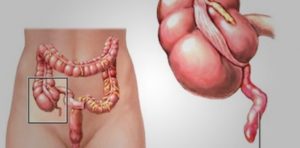
- Phlegmonous (violation of all membranes of the appendix);
- Gangrenous (inflammation of the sheets of the peritoneum with necrosis of the walls);
- Perforated (cells prone to necrosis appear along the edges of the gap);
- Ulcerative-phlegmonous (penetration, infection into all layers);
- Simple (only mucous membranes are damaged).
The complexity of diagnosis lies in the fact that there are diseases similar to appendicitis, which can be conditionally divided into three groups:
- Diseases requiring urgent surgical intervention: ectopic pregnancy, perforated ulcer, acute intestinal obstruction.
- Ailments that require a planned operation: urolithiasis, tumors of the cecum.
- And those that do not need intervention: myocardial infarction, dysentery.
Major potential problems with OA:
- Infection of the wound after surgery.
- The seams come apart.
- Stagnant urine.
- Eventration.
What are the real problems of the patient with OA:
- Elevated temperature.
- Nausea, vomiting.
- Limited mobility.
What is the nursing process for OA therapy?
The nurse should provide first aid, obtain information from the patient, and establish a nursing diagnosis.

The nurse's work plan includes several points:
- First, listen to the patient's complaints, create an anamnesis of the disease (acute or gradual onset; the amount of time that has passed since the onset of pain; whether symptoms have changed since onset).
- Secondly, to learn about diseases that occurred earlier, to assess the general discomfort, the nature of vomiting. After researching and gathering information, the nurse forms the patient's problems and creates a nursing diagnosis.
- Based on individual data, medical history, patient's life, study design and diagnosis, as well as preliminary preparation of an epicrisis, a medical record is formed the patient.
Necessary care after appendectomy: on the first day after the operation, you must carefully monitor the patient's condition (pulse, respiratory rate, vomiting attacks), so that the patient does not suffocate, does not die from stopping hearts. Care also includes monitoring for signs of bleeding and monitoring the normal recovery of bodily functions. In the following days, it is recommended to reduce physical activity in order to gradually restore the body. Heavy loads are only possible after the suture has healed. It must be treated with antiseptics.
Recovery diet
The onset of inflammation of the appendix in most cases occurs due to unhealthy nutrition, so diet is an important step towards the restoration of the body. In the first few days, only liquid food is given to "start" digestion. The next day include coarse bread, chopped chicken. Then they gradually include vegetable soups and cottage cheese.
The use of alcohol, fatty and spicy foods is strictly prohibited.

There are several theories of OA:
- Infectious theory, relative to which inflammation begins in the crypts of the appendix. At the site of inflammation, an inflammatory infiltrate is formed, expansion occurs in the process of absorption of lymphatic fluid.
- The neurovascular theory states that appendicitis begins with a disturbance in stable hemopoiesis in the appendix due to a disorder of the nerve regulator.
- The theory of closed cavities. During the operation, bends or breaks of the appendix are observed, this leads to the formation of separate cavities, where intestinal contents stagnate and inflammation develops.
- Stagnation. According to this theory, inflammation occurs as a result of the accumulation of feces due to contractility problems in the appendix.
- The baugen spasm theory states that a spasm of the bauginia valve, which pulls in the tissues of the appendix, causes muscle spasm.
Preventive measures for appendicitis:
- Drawing up the correct diet, including bran, fresh fruits and vegetables, mushrooms, legumes.
- Monitor bowel function, avoid constipation and lead an active lifestyle.
- Do not abuse antibiotics, they spoil the microflora.
- Monitor your drinking regimen, as drinking pure non-carbonated water can prevent many bowel diseases, including appendicitis.