What happens if appendicitis bursts: rupture of the appendix and consequences
Appendicitis is a common disease associated with a huge risk to humans. A late visit to a medical facility can lead to irreparable consequences. If the appendicitis bursts, you can die. Seeing a doctor at the first symptoms of an inflammation of the appendix will save you from possible complications and save your life.
All age categories suffer from appendicitis: children, adults, the elderly. Inflammation of the appendicular process is especially difficult to diagnose in women, as the symptoms are similar to many gynecological diseases. Calling an ambulance team on time is the only solution. Inflammation of the appendix cannot be treated, it is only excised (the surgical process lasts no more than 1-2 hours in the first stages of the disease).
A ruptured appendix is called peritonitis, and can lead to infection of the abdominal cavity, circulatory system, and even death.
Content
- 1 Symptoms of appendicitis
- 2 Signs and stages of ruptured appendix
-
3 Peritonitis treatment
- 3.1 Diagnostics
- 4 Prophylaxis
Symptoms of appendicitis
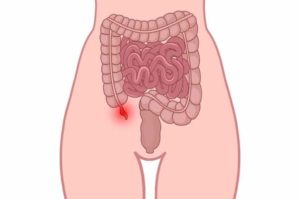
The first signs of appendicitis - painful sensations in the abdominal cavity. The pain is initially localized in the center, around the navel, or at the top of the abdomen. Within an hour, soreness radiates to the right iliac part (lower peritoneum).
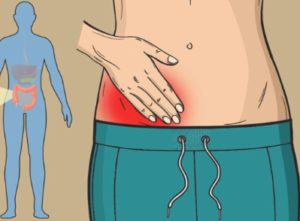
In some cases, the entire abdominal cavity, lumbar region hurts, and there may be a stabbing pain in the area of the liver and kidneys. The atypical anatomical structure of the body suggests the location of the appendix on the left side. In this case, it will be more difficult to understand that this is appendicitis. Soreness in the left iliac region may indicate a number of other conditions, especially if the patient is a woman.
Parallel symptoms will help to find out the disease:
- Temperature increase.
- Nausea, vomiting is possible.
- Bowel disorder.
- Weakness, fatigue.
- Interruptions in the work of the heart muscle (tachycardia).
The pain gradually increases. If the operation is not carried out in time, the consequences will be insidious. The cessation of painful sensations occurs when appendicitis burst. The inflammation of the appendicular process flows into peritonitis (inflammation of the abdominal cavity).
Signs and stages of ruptured appendix
If the operation is not performed in a timely manner, the inflammation of the appendicular process flows into more dangerous forms. The appendix bursts, resulting in infection and death.
Peritonitis symptoms:
- Sharp throbbing pain in the abdominal cavity;
- Flatulence and bloating;

- Abdominal wall tension;
- Fever with high fever, chills;
- Extreme tiredness;
- Tachycardia, shortness of breath, shortness of breath;
- Loss of appetite;
- Problems with urination;
- Constipation, vomiting.
Vomiting gradually includes an admixture of blood, becomes a yellow tint. The pain in the abdominal cavity increases during movement, palpation. Frequent urge to urinate suffers.
Also, peritonitis manifests itself against the background of pancreatitis, inflammatory processes in the pelvic organs, acute gynecological diseases, postpartum complications, constant intestinal obstruction.
When the appendix has ruptured, peritonitis begins. The disease has four stages:
- Irritation (ruptured appendix). The patient feels a sharp stabbing pain in the lower abdominal cavity, nausea, bloating appears. The body temperature rises, there may be vomiting. On palpation, there is a feeling of spreading heat over the abdomen. The abdominal organs are working normally, but the infection has already begun.
- Subside of painful sensations. The patient is relieved, the pain recedes due to the paralysis of the nerve endings. Nausea does not bother, vomiting stops. Sweating appears, increased heart rate and pulse. Complete intestinal obstruction begins.
- Intensive development. The manifestation of symptoms increases many times, leading to a significant deterioration in the patient's condition. Symptoms of body intoxication reappear (nausea, vomiting, bloating, fever up to 40 degrees). The organs of the abdominal cavity (stomach, spleen, liver, bladder, etc.) suffer. Increased gas formation.

- Critical condition. A burst appendicular process leads to loss of consciousness if the patient is not at rest. Cutting paroxysmal soreness in the peritoneal region, intense constant vomiting. Failures in the work of the heart muscle are noted, the functions of the respiratory system are inhibited, renal failure appears.
With untimely assistance, the patient's death occurs. The slightest symptomatology of peritonitis is the basis for emergency hospitalization.
Peritonitis treatment
If the development of peritonitis is diagnosed in the early stages, then successful treatment is possible. Otherwise, it will not be possible to cope with the disease, the patient will die.
Diagnostics
To make the correct diagnosis, the doctor, after a preliminary examination, prescribes:
- General, biochemical blood test;
- General urine analysis;
- Ultrasound examination, CT, x-ray of the peritoneum;
- Puncture of the abdominal cavity.
Also, a special palpation is carried out (after pressing on the abdominal cavity, the doctor abruptly withdraws his hand, at this moment the patient experiences increased pain syndrome).
Medical assistance consists in removing purulent filling in the abdominal cavity during surgery. Postoperative therapy includes antibiotic, detoxification drugs with enhanced action. The recovery process is long enough, 24-hour hospital monitoring is required.
With a small accumulation of emissions from the appendix in the peritoneum, drug treatment in a medical institution is possible. If the infiltration erupts, urgent surgical intervention follows.
It should be remembered that diffuse peritonitis cannot be treated with medication, using folk recipes. Delay in contacting a specialized institution will lead to the death of the patient! Particular attention should be paid to children. If a child has complaints of abdominal pain, it is necessary to call an ambulance.
Prophylaxis
In order not to develop peritonitis, timely removal of the inflamed appendicular process is necessary. The operation should take place in the first three days after the detection of symptoms of acute appendicitis.
If you have the slightest signs of illness, you should contact a specialized institution. Sometimes the diagnosis is difficult to determine. In this case, hardware studies (ultrasound, radiography, laparoscopy) are prescribed. The author's diagnosis is also used (43 symptoms of appendicitis).
According to statistical studies, 65% of patients with appendicitis are women of reproductive age. The diagnosis of such patients is extremely difficult. Symptoms of inflammation of the appendix are similar to those of most exclusively female diseases (gynecological). A special risk group in pregnant women, diagnosis is complicated by the development of the fetus and the enlargement of the uterus, delay will lead to serious consequences (premature birth, placental abruption, threat miscarriage).
To delay the appearance of appendicitis, you must adhere to some rules:
- Balanced, eat right.
- Eliminate harmful and "useless" food (fast food, fried, spicy, fatty).

- Chew the pieces of food thoroughly.
- Do not swallow seeds, seeds, thick peels, or chewing gum.
- Eat more fruits and berries (apples, pears, raspberries).
- Consume foods with fiber (cucumbers, cabbage, carrots, corn, beets, tomatoes, bran, flaxseed, or oil).
- Undergo preventive examinations by a gastroenterologist (1-2 times a year).
- Eliminate alcohol and cigarettes from consumption.
- Cleanse the intestinal tract (1-2 times a month use enemas, micro, water, depending on the state of intestinal motility).
Each individual sign may indicate the development of inflammatory processes. An urgent need to consult a doctor. Even if the diagnosis is not confirmed, you should not rush to leave the medical facility. Inflammation reaches its climax 12-24 hours after the start of the infection process. You can't joke with health.