Appendicitis: symptoms, first signs and causes
Appendicitis is an inflammation of the appendix cecum, appendix, which is a long tube from 5-7 to 20 cm, weighing no more than 7 grams. Until some time in medicine, there was an opinion that the appendix was nothing more than a rudiment from ancestors. Recent studies have shown that the process contains lymphoid tissue inside. The purpose of the fabric is to protect against viruses and hostile bacteria. If the appendix becomes inflamed, it causes significant harm or death.
As a rule, the process can become inflamed abruptly and unexpectedly, then the disease passes in the acute phase.
Symptoms of appendicitis:
- growing pain in the right side of the abdomen;
- pain in the right iliac region on palpation (pressure);
- muscle tension in the right iliac region on palpation;
- increased body temperature;
- nausea and vomiting.
The doctor can easily feel it or determine it by tests. The only treatment indicated for inflammation of the appendix is an appendectomy operation.

Of all abdominal surgeries, most cases are due to inflammation of the appendix. Mostly appendicitis is excised in people aged 10 - 30 years, of any gender. Inflammation of the appendix rarely occurs in infants and children under 5 years of age. The anatomy of the child's body makes adjustments to the development of the disease. During this period, the appendix is presented in the form of a funnel, it is easily emptied.
In medicine, the existence of two types of inflammation is noted: acute and chronic. In acute illness, symptoms develop rapidly, from 6 hours to 3 days. A mild inflammatory process is sluggish, without pronounced symptoms. It is mainly found in women under 25 years of age. Diagnosis of the disease is difficult because the symptoms are not expressed.
It has been proven that appendicitis is a hereditary disease. This means that in carriers of a certain antigen, the disease is inherited.
At the first signs of an illness, you will need to call an ambulance, which should hospitalize the patient. Salvation depends on the promptness of the measures taken. If treatment is delayed, a complication develops - peritonitis, which is fatal.
Content
-
1 Causes
- 1.1 The lumen of the appendix is blocked
- 1.2 Impaired blood supply
- 1.3 Eating disorder
- 1.4 Allergy
- 1.5 Constipation
-
2 Classification
- 2.1 Catarrhal
- 2.2 Purulent or phlegmonous
- 2.3 Gangrenous
- 2.4 Perforated
-
3 Symptoms
- 3.1 In children
- 3.2 In pregnant women
- 3.3 First signs
Causes
The main factors provoking an exacerbation of the disease are not fully understood, and doctors cannot indicate a reliable sign when inflammation will occur. The main reasons relate to microorganisms that densely inhabit the cavity of the appendix. In the absence of external factors, lymphoid tissue inhibits the growth of pathogenic bacteria and prevents the disease from developing.
Consider what reasons triggered the inflammation of the follicular apparatus.
The lumen of the appendix is blocked
There are many reasons for blockage. Tumor formations, as they increase, compress the process, which leads to the impossibility of the outflow of mucus produced in the organ. Shut off the outflow fecal stonesthat form in the rectum and penetrate into the appendix. The presence of worms in the body becomes the cause of blockage of the lumen of the appendix.
The lymphoid tissue is constantly renewed, and when its volume exceeds the norm, the appendicitis canal is completely filled, and inflammation occurs.
Impaired blood supply
The appearance of blood vessels in the lumen, supplying the appendix with oxygen and nutrients, blood clots leads to a violation of the blood supply. There is hypoxia of the tissues of the organ, which causes inflammatory processes inside. Lymphoid tissue loses its protective properties, pathogenic bacteria begin to multiply.
Eating disorder
For the normal process of digestion, it is necessary that dietary fiber is present in the incoming food. They stimulate the walls of the intestinal tract, promote better movement of feces through the canal to the exit. If dietary fiber is not enough, bowel function is sharply reduced, which leads to stopping feces. Liquid comes out of it and hardening occurs, then fecal stones appear, traveling through the intestines. When such a stone appears in the lumen of the appendix, the passage is blocked. The mucus loses the ability to normally exit the organ, and inflammatory processes occur. Eating more coarse fiber is suggested to eliminate intestinal congestion.

Allergy
The lymphoid tissue within the appendix is considered a kind of immune system in the digestive tract. But when, under the influence of certain factors, immune cells begin to produce more enzymes, an allergic reaction occurs, leading to inflammatory processes.
Constipation
In a person prone to constipation, the risk of inflammation is extremely high. When the intestine is weak, its motor functions are reduced, the organ is called lazy. Fecal masses move at a low speed, moisture comes out of them and solidification occurs. Then the feces are transformed into stones that fall into the lumen of the organ.
Classification
The first thing that becomes inflamed in the appendix is its inner mucous membrane. Then the inflammatory process moves into the appendix, gradually covering the entire area. The disease is recognized as simple and complex. In medicine acute appendicitis divided into 4 forms.
Catarrhal
The clinic of this form of the disease is characteristic signs of swelling of the mucous membrane. It increases in size, the lumen decreases. The appendix increases, the pressure inside the organ also increases. Harbingers of inflammation: tolerable pain on the right. Other disorders of the gastrointestinal tract may also appear. The patient complains of nausea, vomiting, dry mouth, bloating.

The inflammatory process at the first stage shows two options for development:
- With good and strong immunity, the adult body itself is able to cope with inflammation. In this case, the edema of the appendix subsides, surgery is not required.
- If the body's immunity is reduced, the inflammatory process will begin to aggravate the disease. Development catarrhal appendicitis it takes six hours.
Due to subtle manifestations, it can be difficult to make a correct diagnosis. Blood tests show slightly elevated leukocytosis and moderate erythrocyte sedimentation rate.
Purulent or phlegmonous
At the time of inflammation, pus is secreted inside the appendicitis. With this form of the disease, not only the mucous membrane of the organ suffers. Purulent inflammation covers all layers of the appendix, accumulates inside and poisons the follicular apparatus. An enlargement of the appendage occurs, the internal pressure rises. The pain becomes more intense.
Serous appendicitis affects the process itself and nearby organs. In this regard, the pain syndrome spreads throughout the abdominal cavity, but the main localization is observed on the right in the iliac region. Together with the development of purulent inflammation, the patient's temperature rises, chills and general weakness occur. He is tormented by nausea, vomiting, pain in the right lower abdomen. The development of the disease occurs over the course of 6 hours to a day.
Doctors additionally identify apostematous appendicitis as a subform of a purulent disease. The disease is characterized by the occurrence of point foci of inflammation, where dead tissue and neutrophilic leukocytes are collected.
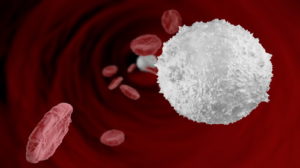
Leukocytes in the body
Suppurative appendicitis is easily diagnosed because of the symptoms of abdominal irritation that occur. You need to do blood tests that will show increased leukocytosis.
Gangrenous
Launched inflammatory process. The development of this type of appendicitis begins within 24 hours (the deadline is 72 hours) from the moment of onset of the disease. The disease is characterized by the dying of organ tissues. Necrosis affects nerve endings and blood vessels located in the organ. At certain times, the symptoms of appendicitis subside, the patient feels better. Nausea goes away, vomiting stops, pain goes away. It is a matter of time, then the symptoms return. A false symptom of recovery occurs due to the death of nerve endings and the pain goes away a little.
The patient weakens, organ tissues die off, decay products are carried by the bloodstream throughout the body, poisoning other internal organs. As a result of severe intoxication, the patient's temperature rises sharply to a fever (from 39 to 40 degrees), blood pressure drops to 90 mm Hg. The heart rate is capable of reaching up to 100 beats per minute. It is worth noting that gangrenous appendicitis can proceed without temperature, an increase in heart rate always occurs and is capable of reaching 120 beats / min. The patient does not feel severe pain, but there is a general weakness in the body. Vomiting is observed for a long time, but it is not easier to put on, on the contrary, the body quickly loses fluid, symptoms of dehydration appear.
External examination of the patient makes it possible to recognize the gangrenous type of appendicitis. Pale skin, tongue coated gray, dry mouth. The abdominal muscles are tense, the intestines are not working. The patient's abdomen is hard, distended and painful to the touch.
If left untreated, the patient has complications. The inflamed appendix is capable of bursting, then the contents spread through the free abdominal cavity, causing necrotic processes in the tissues of other organs. An urgent surgical intervention is needed.
Perforated
In another way, the mentioned form is called the rupture stage. The walls of the appendix cease to be uniform and are destroyed. The contents of the appendix enter the free peritoneal cavity. Pus is distributed in the layers of the peritoneum, inflammatory processes occur on their surface - peritonitis. Peritoneal events require immediate hospitalization and surgery.
When peritonitis develops inside, the patient's condition deteriorates sharply. Blood pressure drops, heart rate increases significantly, the patient is in a semi-conscious state. The skin turns pale, a brown coating is visible on the tongue. Being in critical condition, a person may not feel pain - this is a bad sign.
The latent form of the disease is often diagnosed in diabetics. The pain is mild, poorly indicative of the source.
Symptoms
Inflammation of the appendix manifests itself differently in children and adults. The most important and first symptom is severe pain syndromes. At first, a person gets the impression that it hurts in the abdomen, but gradually, within 5-6 hours, the pain syndrome shifts to the right, to the iliac region.
An atypical form of appendicitis manifests itself with a different location of the appendix, which in turn provokes a different localization of pain. With the classic arrangement of the appendix, the pain is felt on the right in the iliac region. If the congenital appendix is higher than it should be, the pain will go to the hypochondrium. A strongly lowered process gives off pain to the pelvic region, where the bladder is located. People with a mirror-like arrangement of internal organs have left-sided appendicitis.
With the development of the disease, the pain becomes more intense, especially when coughing, laughing, walking. A slight subsiding of pain occurs when the body is horizontal on the right side.

Disorder of the digestive tract is expressed in constant nausea, vomiting. Periods of constipation are followed by periods of diarrhea, flatulence. The pulse quickens and ranges from 90 to 100 beats per minute.
With purulent or gangrenous appendicitis, the patient has a general strong intoxication of the body, which is expressed by weakness, pallor of the skin. At complications of appendicitis an abscess forms in the abdominal region. The formation of blood clots in the arteries supplying the follicular apparatus with blood is not excluded.
The disease manifests itself in different ways in children, pregnant women, in people of age, in men.
In children
Acute appendicitis is extremely rare at 4-5 years of age. From birth to seven years in a child's body, the anatomical structure of the cecum differs from that of an adult. It has the shape of a funnel, ending with appendicitis, there is no sphincter. Stagnation does not appear with the described structure. But gradually the body is rebuilt, respectively, the cecum and the appendix change.
Inflammation of the follicular apparatus provokes the appearance of intoxication symptoms. Reason: in a child's body, the nervous system is unstable and easily excited.

The onset of the disease is unexpected, the baby's condition deteriorates sharply, the body temperature rises to 39 degrees. When you increase, you can knock it down. Vomiting, loose stools are frequent companions. The color of stool and urine may change. While being examined by a doctor, the first suspicion of the presence of an infection in the intestine does not speak about appendicitis.
Specific signs of the inflammatory process in the appendix - wandering pain syndrome in the abdomen, spreads over the entire surface, without localizing the source. Young children experience pain concentrated around the navel. These symptoms do not make it possible to correctly diagnose the disease.
In pregnant women
Appendicitis during pregnancy dangerous for the health of mom and baby. The largest number of diagnosed inflammation occurs in the first three months of gestation (approximately 75%). In the second trimester, the percentage of cases decreases to 53. In the last three months before childbirth, 15% of women complain of appendicitis.
Symptoms depend on the period of treatment. In the first trimester, when the size of the fetus is small, the signs of acute inflammation do not differ from the general ones. As the uterus grows, the internal organs are displaced, taking into account the initial positions. The cecum is also subject to change.
The pain begins in the right hypochondrium, the abdominal muscles are not tense. An analysis for leukocytosis does not give a reliable result, since an increased value is observed during pregnancy. As a result, a correctly diagnosed diagnosis occurs in fewer than forty women out of a hundred. The remaining 60 receive a preliminary opinion from the doctor about a possible miscarriage.
Correct diagnosis and surgical procedures do not diminish the risk of consequences. If appendicitis is uncomplicated, then the risk of possible termination of pregnancy remains at the level of 2-12%. Scion rupture increases the risk by up to 50%. Even after surgical removal, the risk of infectious inflammation remains.
Possible complications in pregnant women:
- An attack caused by an infection. Catarrhal appendicitis provokes up to fifteen percent, rupture of the appendix increases the risk by up to 90%.
- Obstruction of the intestinal tract. The onset of the disease occurs in 20 cases out of 100.
- Miscarriage after removal of the appendix occurs in a quarter of cases.
- Mother's death occurs in 16% if peritonitis has developed. With appendicitis without complications, there is no mortality.
First signs
The manifestation of the disease depends on the patient's age and gender. Doctors identify the first signs of appendicitis, which are present in all:
- Pain syndrome in the abdomen, in the epigastric region and in the lower back.
- Weakness in the whole body.
- The body temperature is elevated.
- Nausea and vomiting. The symptom is constant, and vomiting does not bring relief.
- A person's sweat increases.
- The pulse is rapidly increasing.
As a rule, the body temperature does not exceed 38 degrees. Since its increase does not always occur, it is worth getting the indicators of the rectum. Rectal temperature is required to measure if there is a suspicion of an ailment. The patient shows early symptoms: walking in a bent state, chills and fever at the same time, lack of desire to eat, pain in the navel.
With the timely removal of the inflamed process, the prognosis for the patient is positive.