Cancer of the penis: features of the onset, clinical manifestations and treatment
Cancer of the penis is a malignant tumor that develops from the epithelial cells of the skin. Most often the disease affects the glans penis and the foreskin( part of the skin covering the head of the penis).The disease is dangerous as local changes and disruption of reproductive and urinary systems, and the ability to drop-out of tumor cells and the spread throughout the body( metastasis).The larger the size of the primary tumor and its growth within the penis, the higher the likelihood of metastasis. Most often affects men over 70 years of age.
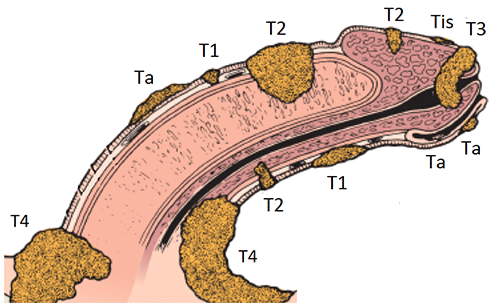
Stages of cancer of the penis.
Content
- 1 Causes of and predisposing factors
- 2 Clinical manifestations Diagnosis
- 3
- 4
- 5 approaches to treatment and prevention Prediction
Causes of and predisposing factors
number of diseases of the penis increases the likelihood of developing cancer.
Contributing factors:
-
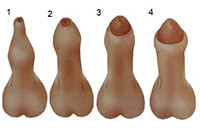
Phimosis is one of the predisposing factors to penile cancer.
phimosis( narrowing of foreskin);
- chronic inflammation caused by banal( streptococcus, E. coli) or specific( Trichomonas, syphilitic pale treponema) bacterial flora, fungi, herpes virus;
- infection of papillomaviruses of 16 and 18 type, leading to the appearance of warty or villous formations;
- thickening and thickening of the skin in the area of traumatic injury or mole( skin horn);
- inadequate hygiene;
- smoking.
When narrowing the foreskin, there is an increased accumulation of smegma( a secret secreted by its glands) in the skin fold. This increases the risk of infection. As a result of exposure to pathogenic bacteria and processes associated with inflammation, decomposition of smegma, a change in the composition and the acquisition of its carcinogenic properties( increasing the likelihood of developing malignant tumors).
In addition, there are some diseases of the penis, which are neoplasms. They are located within the main skin tissue( dermis) and physicians and regarded as a precancerous diseases, and as tumor limited( within skin) lesions with a high probability of degeneration in a cancer. Such diseases include, for example, erythroplasia Keira and Bowen's disease, manifested by redness and the formation of red plaques, with varying degrees of damage to the cells.
Clinical manifestations of
In the presence of phimosis, early signs of a tumor are not subjectively felt. Most often, patients seek medical help in advanced stages and with common forms.

Cancer is manifested by painful lesions on the surface of the penis.
It can be:
- erosion;
- ulcers;
- cracked;
- nodules;
- areas of induration( compaction, until hardening).
With the growth of tumor tissue and its disintegration, there are swelling and spotting, with infection - itching, discomfort and burning of the affected area. With the spread of the process on the urethra and the damage to its outer opening, it becomes difficult and it becomes painful to urinate. Also, discharge with an unpleasant odor is possible.
The described manifestations of the disease make it possible to isolate forms of cancer:
- ulcerative( circular ulcer);
- knotty( smooth surface, low density formation);
- papillary cancer( overgrowth resembling cauliflower);
- edematous( swelling of the penis, arising on the background of an ulcer or nodule).
All these formations, as a rule, are painless.
The spread of malignant cells, their screening from the tumor zone and distribution along the body begins on the lymphatic vessels and nodes( lymphogenous metastasis).First of all, the nearest( regional) lymph nodes are affected: iliac and inguinal-femoral. Remote metastasis occurs rarely, affects the lungs, liver, bones, brain.
General manifestations indicating the likelihood of disease progression:
- gradually increasing fatigue;
- general weakness;
- poor appetite and weight loss;
- an increase in inguinal lymph nodes.
Diagnosis
The detection of the disease is based on the analysis of symptoms, a patient's questioning about the onset and course of the disease, the examination and probing results of changes in both the penis and inguinal lymph nodes. Detection of various skin changes, especially on a dense basis, painless, accompanied by purulent discharge with an unpleasant odor, requires the exclusion of malignant disease.
Mandatory research:
-
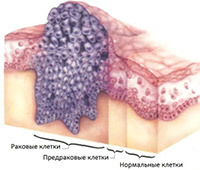
After cancer cells are precancerous cells, which are also pathological.
general blood test( to detect inflammation, as a reaction to tumor damage);
- general urine analysis( to determine the involvement of the urinary tract in the process);
- ultrasound of the penis( to visualize the size, position, prevalence and nature of the tumor, the condition of the lymph nodes);
- MRI( to detect changes in soft tissues and vessels, the boundaries of the tumor);
- biopsy and study of the obtained material( for the diagnosis of cornificating and nonkerberry squamous cell cancer).
When suspected of metastasis, an X-ray examination of the chest and bone, ultrasound and MRI of the abdominal cavity is performed.
Diagnoses, prescribes treatment and the patient's oncologist observes the patient.
Approaches to treatment
For treatment, a combination of several methods is used: radical tumor removal during surgery, chemotherapy and radiation therapy.
If the diagnosis is set at the initial stage, then minimally invasive interventions( laser or cryodestruction) allowing the preservation of organs are allowed. Organosaving operations: excision of the foreskin, resection( partial removal) of the glans penis. Effective and close-focus X-ray therapy, which also destroys the tumor tissue.
A radical operation involves amputation of the penis and removal of the inguinal and femoral lymph nodes from both sides. A combination with neoadjuvant radiotherapy or chemotherapy or adjuvant is mandatory. Neoadjuvant is performed before the operation, it allows to reduce the amount of surgical intervention. Adjuvant - after a radical surgery to remove micrometastases. Cisplatin, methotrexate, vinblastine, and 5-fluorouracil are used for chemotherapy. For inoperable neoplasms, symptomatic, palliative radiation, and chemotherapy are used.
Possible postoperative complications:
- micturition disorders due to narrowing of the newly formed urethra;
- development of infection in the kidney( pyelonephritis);
- impossibility of sexual intercourse;
- reduced sensitivity of the penis.
Currently, the operations for the reconstruction of the penis. Possible prosthetics, which determines the full sexual rehabilitation of the patient after treatment.
Prognosis and prophylaxis of
With timely treatment of a localized( without metastases) form of the disease, survival for 5 years reaches 70%, with lesion of 2 or more lymph nodes - about 50%.
Obligatory after surgery and course of therapy is the observation of an oncologist. Periodic examinations allow you to monitor the patient's health status, in time to detect relapse of the disease.

Regular hygiene, including intimate - one of the main preventive measures.
To prevent the disease should follow the methods of prevention:
- regular removal of smegma( intimate hygiene);
- circumcision( circular excision of the foreskin) with its narrowing;
- refrain from smoking;
- to avoid traumatization of external genitalia;
- protect against possible infection with sexually transmitted infections.
Timely and complete treatment of inflammatory diseases of the genitourinary system also prevents the development of tumors.
Recommended for viewing: