Features of the use of alpha-adrenoblockers for the treatment of prostatitis
Alpha-blockers are drugs that are completely( non-selective) or partially( selective, alpha1 and alpha2) temporarily block the ability of adrenoreceptors to interact with catecholamines( epinephrine and norepinephrine).As a result, the activity of the sympathetic nervous system is weakened, and a number of therapeutic effects associated with the localization of these receptors arise.

Alpha-adrenoblockers are drugs often used to treat urological diseases in men.
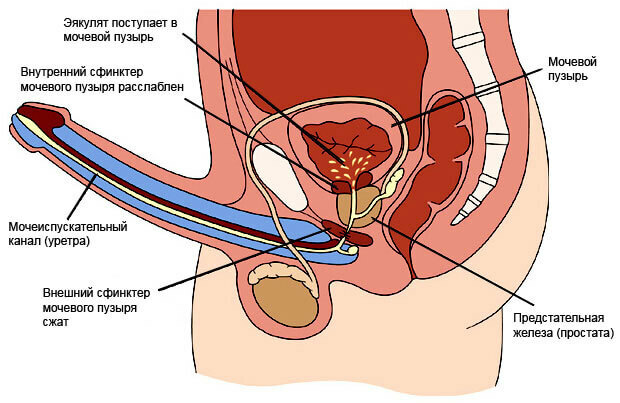
Alpha-1 adrenoceptors are found in small arteries. Their blockade reduces vascular spasm, lowers blood pressure. A separate subgroup - alpha1a-adrenergic receptors - is located in the prostate gland, urethra and the neck of the bladder. Blocking their activity leads to a relaxation of the smooth muscles of the urinary system and to the simplification of the process of urination.
Alpha-2 receptors are localized in neuromuscular synapses( structures where the nerve impulse is converted into active muscle contraction).Their blockade increases the flow of adrenergic impulses and increases the concentration of norepinephrine. As a result, the arteries of the genital area, kidneys and other internal organs expand. Erection is also increased, weakened by the influence of constant stress.
Contents
- 1 Indications and contraindications
- 2 Therapeutic effects in inflammation of the prostate
- 3 Possible side effects of
- 4 The most effective drugs
Indications and contraindications
Non-selective alpha-blockers have a sharp antihypertensive effect and are indicated for the treatment of severe hypertensive crises, especially when a tumor of the adrenal medulla is suspected(Pheochromacitoma).At present, in practical medicine, phentolamine and phenoxbenzamine are used. These drugs can only be prescribed by a doctor, and they are used in a hospital setting.
The main indications of are:
- arterial hypertension;
- initial stage of chronic heart failure;
- disorders of urinary outflow, including prostatitis, adenoma and benign prostatic hyperplasia.
In some cases, the use of these medicines is limited.
Basic contraindications :
- previously observed orthostatic hypotension( lowering blood pressure, down to fainting, with a sharp rise, as well as with prolonged standing);
- reception of other alpha-blockers( threatens with a sharp increase in antihypertensive effect and manifestations of side effects);
- intolerance and hypersensitivity to the active ingredient and additional components of the drug;
- sharp violation of the hepatic functions.
In the presence of atherosclerotic vascular lesions, significant deterioration in kidney function, treatment with other blood pressure lowering drugs( sartans, beta blockers), and if the age of the man exceeds 75 years, treatment is prescribed from small doses and requires constant medical supervision and follow-up.
Therapeutic effects in inflammation of the prostate
With the prostatitis the urination processes are violated, the pressure in the urethra increases, the neck of the bladder does not relax completely. If in an acute process, pathological changes are more associated with swelling of the prostate tissues, then in the chronic process, with its structural rearrangement and deformation. As a result of prolonged inflammation, reverse urine flow occurs, the rate of urinary flow decreases sharply, which creates the prerequisites for the formation of microcalcinates in the prostate gland and the occurrence of frequent relapses.
Effects of alpha1-blockers with prostatitis:
- Elimination of acute and prevention of chronic urinary retention;
- reduction of pain syndrome;
- weakening of the manifestations of hyperactivity of the urinary bladder( urinary incontinence, frequent urge to urinate);
- decrease in the frequency of relapses in chronic inflammation of the prostate.
Possible side effects of
Given the presence of adrenoreceptors in various organs, as well as individual levels of catecholamines( epinephrine and norepinephrine) in each person, independently, without consulting a doctor, prescribing this group of drugs is dangerous to health.
If the drug is prescribed by a doctor, not only the indications for use are taken into account, but also the concomitant diseases that limit the use of these drugs, then the alpha-blockers in therapeutic doses are absolutely safe.
Rarely found side effects of :
- headaches, weakness, drowsiness, dizziness;
- discomfort in the abdomen, nausea, dry mouth, loosening of the stool;
- more frequent heart contractions;
- orthostatic hypotension;
- increased pain in the heart if the patient has angina pectoris;
- skin rashes, accompanied by itching;
- nasal congestion;
- cancellation syndrome( up to 10% of cases) that occurs with complete discontinuation of reception and is manifested in increased blood pressure and difficulty in urinating.
Given that patients take alpha-blockers, in most cases, in combination with other drugs, and the abrupt withdrawal of such drugs can be dangerous, then in case of undesirable manifestations, it is necessary to consult a doctor as soon as possible. The doctor will determine with which medication the side effects are related and take the necessary measures.
The most effective drugs
Alfa1-adrenoblockers in the treatment of hypertension belong to the drugs of the 2nd series. They are used when traditional drugs( angiotensin-converting enzyme inhibitors and beta-blockers) are contraindicated.
Uses:
- terazosin;
- doxazosin;
- prazosin.
The effect of improving the process of urination makes these alpha1-adrenoblockers the drugs of choice for the combination of prostatic hyperplasia, prostatitis and other causes of urinary drainage disorders with high blood pressure.
Urinelective alpha-blockers are prescribed for prostatitis, adenoma, benign prostatic hyperplasia. Their influence on blood pressure is insignificant, but it is present and requires medical supervision.
The most effective:
- tamsulosin;
- alfuzosin.
Of alpha2-adrenoblockers, in clinical practice, Yohimbine hydrochloride has been successfully used to treat erectile dysfunction.
Thus, alpha-blockers are a group of drugs that affect the cardiovascular and genito-urinary systems. Their use increases the effectiveness of treatment of various urological pathologies. With prostatitis, they can speed up the resolution of the acute process and bring the recovery closer, and also improve the course of chronic inflammation and help maintain remission.
Read more: Candles for prostatitis: list of drugs
Recommended for viewing: