Nylon dentures: what it is, photo patient reviews
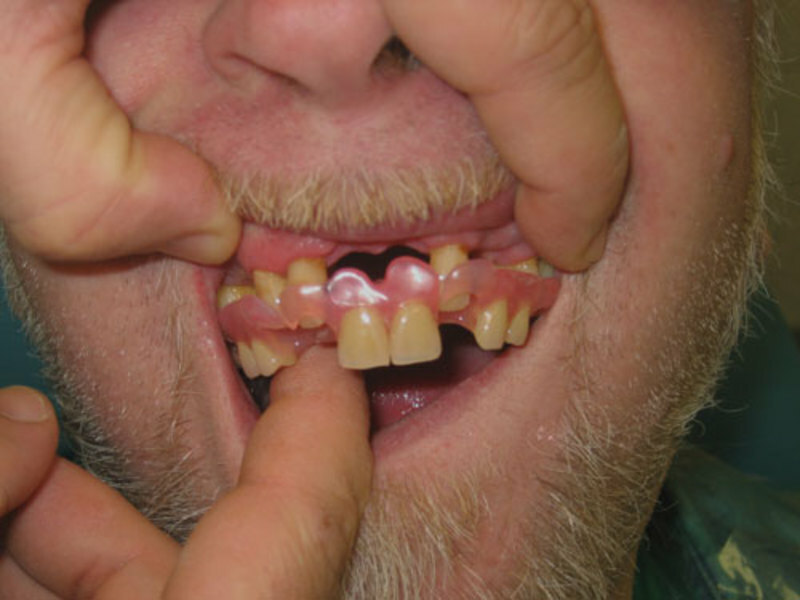
There are dozens of different types of prosthetics and restoration of teeth and as many designs.Despite the high aesthetic parameters of ceramic implants, the manufacture of removable structures has not gone to the background because of the availability of products, comfortable wearing and reliability.Especially it concerns the modern nylon prosthesis on the lower and upper jaw( photo below).Materials for manufacturing meet all the requirements of modern man of any age and sex.
Types and service life of nylon prosthesis
The popularity of these models is due to high aesthetic performance.The base on which the crowns are fastened is made of translucent color-permeable nylon, which completely mimics the natural color of the gum.
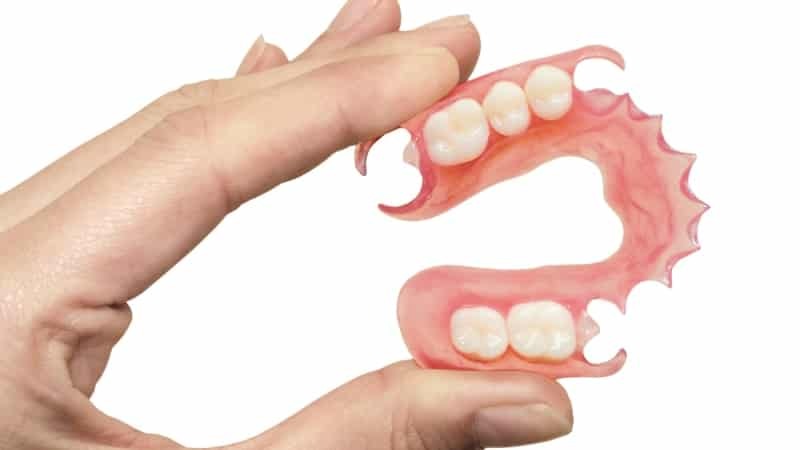
Nylon denture
Nylon is an artificially derived polymer component( plastic) with increased strength, softness and flexibility.It is considered to be biocompatible and hypoallergenic.The material does not change the shade under the influence of external factors, food colors, pigments.Also, there are no pores that could detain pathological microflora, food smells and remnants of products( which can not be said about acrylic and plastic products).
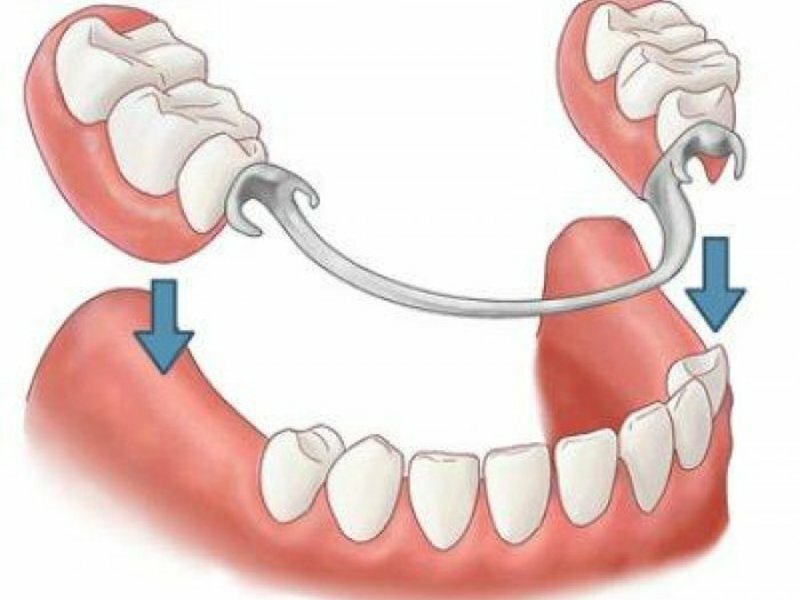
Removable nylon dentures are installed on the gums and fixed with dental-alveolar locks( hooks) for living supporting teeth.Fixing elements are also made of nylon or silicone, so they coincide in color with natural fabrics and remain invisible to others.This significantly distinguishes flexible prosthesis from obsolete metal structures.
Also locks( clamps) ensure maximum fit of the prosthesis, its rigid fixation without loosening and falling out.Therefore, the supporting teeth in this case do not grind over the crowns.
On the Internet you can find information that nylon dentures are banned in Europe, however, this is not entirely true.Each manufacturer gives the product a certain rigidity.If the parameters are met the requirements of dental associations, prosthetics with nylon material is possible in any country.
Many consumers report that nylon, as a material for prosthetics, is much more pleasant and comfortable than plastic and silicone.That is why reviews about nylon dentures from patients are the most positive.Especially it concerns the possibility of constant operation of the system without having to be taken out for the period of sleep.
The service life of the systems is several years( up to 7), but this depends on the dentist's experience, operating conditions and quality of care.
There are several types of designs.
- Partial nylon removable denture. Used in the absence of several consecutive teeth.
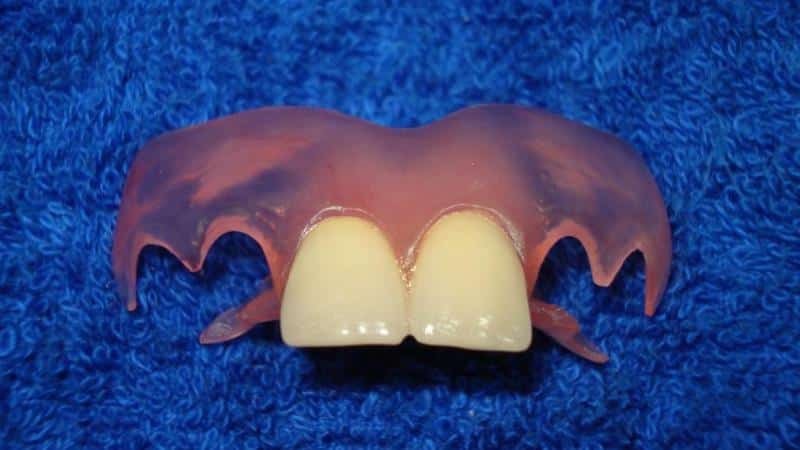
Partial nylon removable prosthesis
- Completely removable. This kind is always prescribed for adentia or prosthetics of the entire dentition of any jaw.
- Microprosthesis ( the second name is "butterfly").It is made to restore a maximum of 2 teeth, more often - one.
Pros of nasal prosthetics
We learned that these are nylon dentures.Let's look at the advantages of prosthetics with this material.
Pros:
- Increased flexibility, softness and elasticity of .This makes it possible to adapt the design as much as possible to the anatomical forms of the jaw and tooth row, which provides comfort and quick addiction.
- Precision and tight fit. During installation, the prosthesis sits up, as it is poured in, therefore loosening and damaging the system is excluded.
- Strength of .Despite the softness, the nylon prosthesis on the upper jaw( photo below) is quite sturdy.It is resistant to high loads and pressure during biting and chewing even hard objects.Therefore, nylon models are successfully used for prosthetics of professional athletes.
- Lightness .The lightweight component eliminates the possibility of rubbing the mucosa and the muddy tissues.
- No pores. As we mentioned earlier, nylon does not take up food residues, food odors, and traces of bacteria, which ensures oral hygiene and fresh breath.
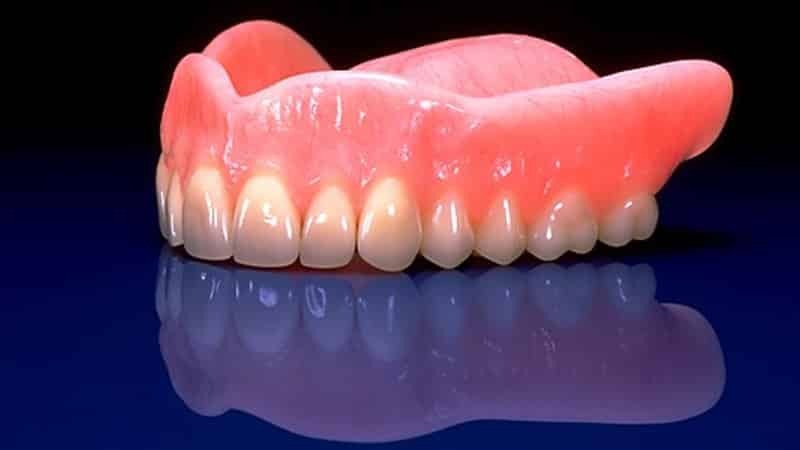
Complete nylon denture
- High-quality dye. Pigment filling nylon denture, gives it a well-groomed and natural appearance, makes it as natural as possible.Also, the paint does not go away with time, does not turn yellow, does not dim and does not absorb other dyes.
- Versatility of .Apply nylon prosthesis with complete absence of teeth, as well as partial and single.In this case, patients can be people of any age( including children), as well as cancer patients.
- Hypoallergenicity .Technologists have invented a polymer that causes allergies extremely rarely.Therefore, the models are indispensable for patients with allergies to acrylic, metal, silicone, etc.
Disadvantages of the
Considering the positive properties of nylon prostheses( reviews from patients are numerous), we can not mention the drawbacks:
- Pressure on mucous .During chewing, the pressure is distributed unevenly, exerting a load on the mucosa, soft tissues and jaw.This leads to the omission of the gum and atrophic processes in the bone tissue.
- Excessive flexibility. It turns out that elasticity can be a drawback.Due to the uneven load, some areas of the prosthesis are more involved in chewing, which can cause discomfort and even painful sensations.
- Construction subsidence. All of the above factors lead to a weakening of the system and its subsidence.This in the future can trigger inflammation in the oral cavity.Therefore, a nylon prosthesis is recommended with a partial absence of teeth when the area of the construction is minimal.
- Rough section. Despite the absence of pores in the material, it is quite rough.Usually it is polished before use, but not in the area of adhesion to the mucosa.In this area, whitish plaque, stone may accumulate over time, a bad smell will appear.
- Time consumption. The production of flexible nylon dentures( expert reviews are very positive) takes a lot of time( sometimes up to 6 months).Then the design is carefully adjusted to the client, after which he gets used to it, reveals the causes of discomfort.All this can take a few more months.
- Frequent visits to the dentist.
The installation of the prosthesis binds you to regular visits to the dentist for fitting the device and professional cleaning of the oral cavity.
The installation of the prosthesis ties you to regular adjustments and professional hygienic cleaning of the oral cavity and prosthesis from dental calculus, plaque.Prepare to enroll every 4-5 months.
- Cost of the product. Patients often ask which denture is better: acrylic or nylon( reviews of the latter are positive).Interest is due to the high cost of nylon products, which, judging by reviews and reviews, are not particularly superior as good acrylic or silicone.So is it worth overpaying?This issue remains open.
Care for nylon systems
We examined what these "flexible dentures" are made of nylon polymer. Now it is necessary to familiarize with rules of competent care of them that served the declared 5-7 years:
- Regular teeth cleaning - 2 times a day minimum, preferably after meals.
- After each meal, remove the prosthesis and wash it.
- Once a day, clean the dentures with professional paste to remove plaque, food colorings and pigment.
- Several times a week, use a floss to clean the interdental space.
- Also, a couple of times a week, use irrigators filled with a disinfectant for prostheses.
- Periodically lower the structure into a beaker with a special solution for cleaning from lime deposits, soft plaque and general disinfection.
- Visit the dentist every six months for professional hygienic cleaning.
- Protect the removable structure from injuries and mechanical damage.For example, you should not wear it if you plan active sports training, especially related to hand-to-hand fighting.
- Do not leave dental nylon dentures( photo below) on the surface for too long.Moisten dentures to avoid deterioration of the material from drying out.
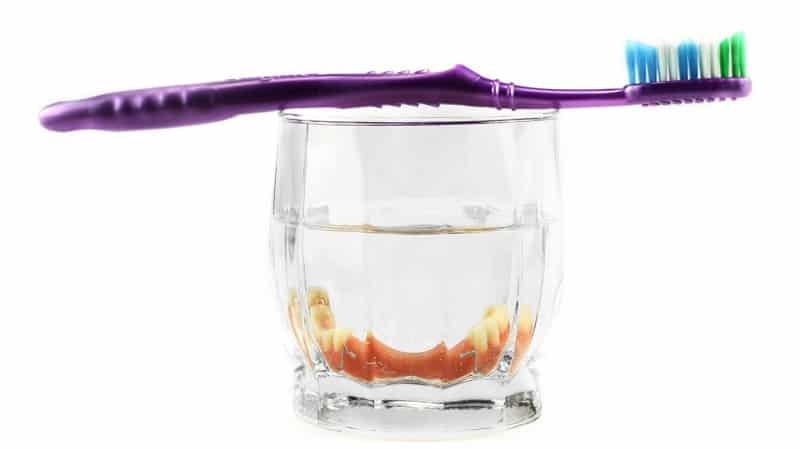
Maintenance of nylon systems
- It is forbidden to make an independent adjustment or repair of the system, to use folk remedies for cleaning the product and to take another initiative that is not coordinated with the treating dentist.
- complementary prosthesis with a new crown due to loss of the patient's living tooth( except for the support);
- change in the area of the nylon prosthesis( may be associated with inflammatory processes under the construction, caries and other factors);
- activation of lock-clamps;
- fit;
- cleaning of the prosthesis from hard stones.
If you follow the advice of a dentist, think carefully about regular hygiene, then neither repair, nor regular professional cleaning you will not need.If all requirements are met, the nylon product will last you at least 5 years.